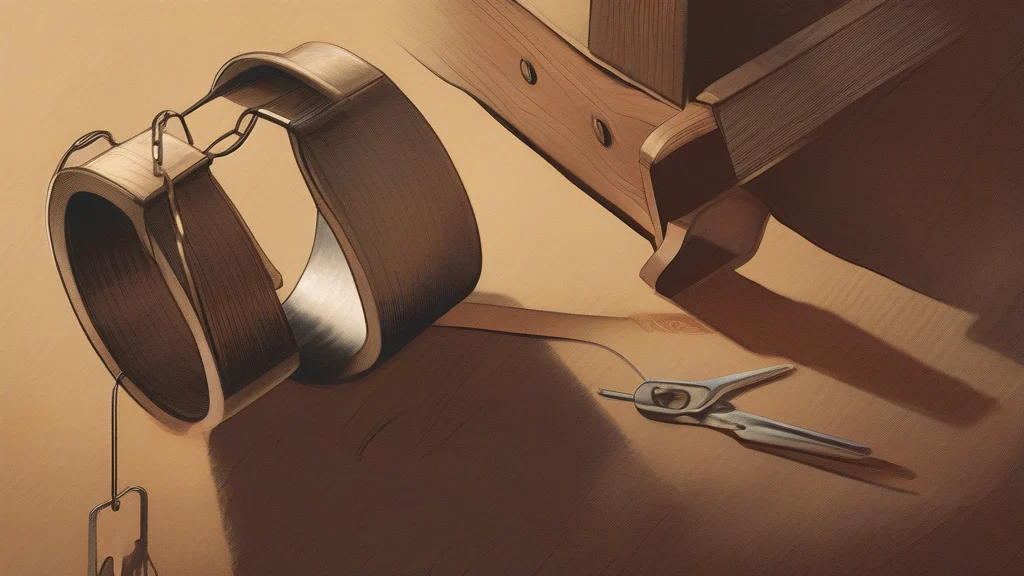
What does clamping mean?
Clamping refers to the act of fastening, gripping, or pressing objects firmly together, typically with a device called a clamp. In workshops and engineering, it is a fundamental operation: woodworkers clamp glued joints while they set, machinists secure workpieces before cutting, and surgeons apply clamps to blood vessels during operations. The word also has a well-established figurative use: governments and institutions are said to be 'clamping down on' undesirable behaviour when they impose stricter rules or enforcement. Derived from the older word 'clamp', which itself traces back to Germanic roots, 'clamping' carries connotations of control, compression, and deliberate restraint rather than violence. It appears constantly in technical manuals, DIY guides, and journalism alike, making it a practical word that bridges the physical and the metaphorical: whether holding two boards steady or holding a situation firmly in check, clamping describes purposeful, applied pressure.
Fastening or gripping something firmly, especially with a clamp device.
"She was clamping the leather strips in place before stitching them."
The act or technique of applying a clamp to hold something securely in position.
"Proper clamping ensures the joint stays aligned while the adhesive cures."
Common in technical and instructional writing about woodworking, metalwork, and surgery.
From woodworking benches to police 'clamping down on' crime, one small word grips everything from timber to traffic violations.
Reviewed by Deb Chak, Editor. AI-assisted content curated by RJS Tech Solutions LLP.
Etymology of clamping
Clamping derives from the verb 'clamp', which appeared in English by around the 14th century, borrowed from or influenced by Middle Low German and Middle Dutch words such as 'klampen'. The underlying Germanic root relates to Old English 'clamm', meaning a bond or fetter, and is connected to the word 'clam'. The figurative sense of imposing restrictions, as in 'clamping down on', developed later and became widespread in twentieth-century usage.
How clamping is actually used
Mostly used in technical, workshop, and medical contexts when literal; the figurative 'clamping down on' is common in news and political reporting and carries a connotation of authority and restriction.
Easily confused with clamping
'Cramping' means causing painful muscle contraction or restricting something uncomfortably, whereas 'clamping' means firmly fastening or gripping an object, usually deliberately.