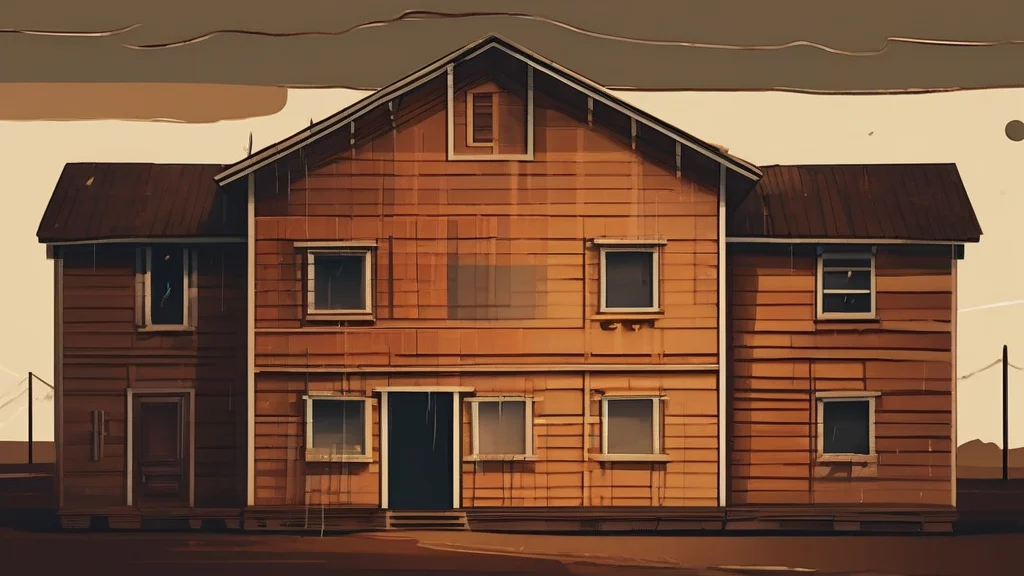
What does clapboarding mean?
Clapboarding is the North American term for a traditional form of wooden wall cladding made up of long, narrow horizontal boards fixed so that each board overlaps the edge of the one beneath it. This overlapping arrangement channels rainwater down the face of the wall and keeps it out of the frame, which is why clapboarding became the standard finish for timber houses in colonial New England and remains common across the eastern United States. The word derives from the Dutch verb 'klappen', meaning to split, because early boards were riven — split along the grain — rather than sawn. In Britain and other parts of the English-speaking world the same material is generally called weatherboarding. Clapboarding carries strong associations of traditional, vernacular architecture, evoking painted New England farmhouses and weathered coastal cottages, and it is frequently discussed in restoration and heritage contexts where original timber cladding is valued over modern substitutes such as vinyl siding.
nounClapboarding is a covering of narrow horizontal boards, each overlapping the one below, fixed to the outside walls of a wooden building to shed rain. It is the North American term for what is called weatherboarding in Britain.
- Overlapping horizontal boards used as exterior wall cladding on a wooden building (North American usage).
"The old Cape Cod house was sheathed in white-painted clapboarding that had weathered to a soft silver at the corners."
"The renovation preserved the original cedar clapboarding on the street-facing facade."
"Salt spray had eaten away the lower courses of clapboarding, exposing the framing beneath."
Rarely pluralized; the uncountable singular is standard even when multiple buildings or sections are meant.
"The survey catalogued several distinct historic clapboardings across the district's oldest houses."
The name comes from the Dutch verb 'klappen' — to split — because the boards were literally split, not sawn, along the grain.
Reviewed by Deb Chak, Editor. AI-assisted content curated by RJS Tech Solutions LLP.
Etymology of clapboarding
Clapboarding derives from 'clapboard', a word borrowed in the early seventeenth century from Dutch 'klaphout', from 'klappen', meaning to split or crack. The name reflects the original manufacturing method: the boards were riven, or split lengthwise along the grain, rather than sawn. The compound 'clapboarding' arose in American usage to describe the material collectively, paralleling the British compound 'weatherboarding'. Its Germanic root also underlies the native English word 'clap' and related terms such as 'clapper'.
Related word forms
How clapboarding is actually used
Chiefly North American; British speakers say 'weatherboarding'. Usually treated as an uncountable mass noun referring to the cladding material collectively, though it can be countable when referring to individual boards or types.
Easily confused with clapboarding
Claptrap means pretentious or showy language designed to win applause, while clapboarding refers to overlapping wooden wall siding.
Weatherboarding is the British term for essentially the same overlapping timber wall covering that Americans call clapboarding.