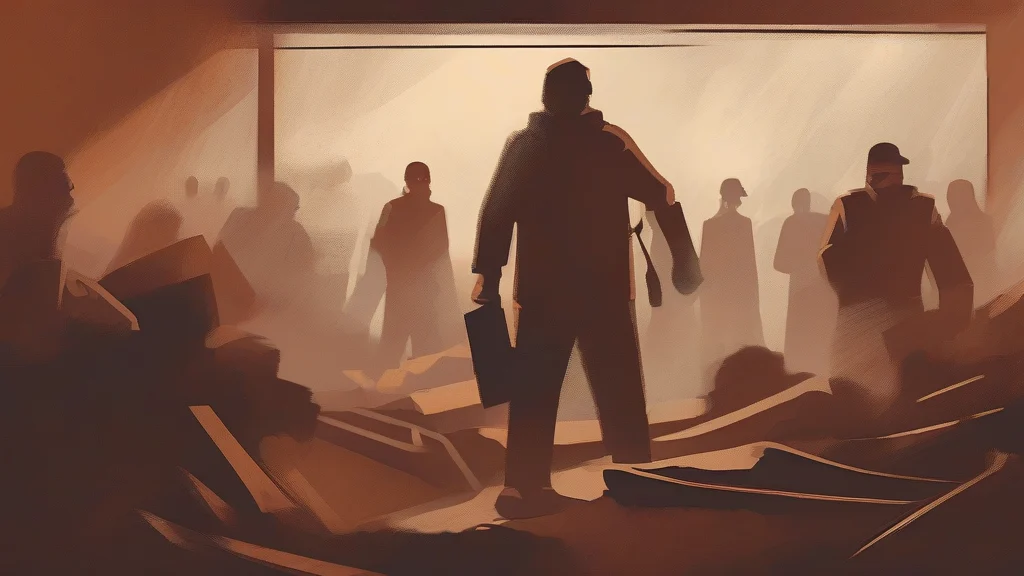
What does clashed mean?
"Clashed" is the past tense and past participle of the verb "clash," a word with several closely related senses. At its most concrete, it describes coming into forceful physical contact — protesters clashed with police, or two armies met in battle — often accompanied by noise or violence. More abstractly, it refers to open disagreement or argument: rivals clashed during the debate, or two colleagues' personalities clashed from the start. It can also describe practical conflicts, such as two events scheduled at the same time, and aesthetic incompatibility, as when colors or styles clash in a way that looks jarring rather than harmonious. Derived from an imitative root suggesting the sound of striking metal, "clash" carries vivid, energetic connotations. It is especially frequent in news reporting on confrontations and disputes, making it one of the standard verbs journalists reach for when describing conflict of almost any kind.
verbPast tense and past participle of "clash": to have come into violent contact or conflict, or to have been in disagreement; also, to have been mismatched in appearance or scheduled at conflicting times.
- To have come into physical collision or armed conflict.
- To have argued or been in strong disagreement.
- To have conflicted in scheduling, so two events could not both be attended.
- To have been discordant or unattractive when combined, as colors or styles.
"The two ministers clashed publicly over the new trade policy."
"Protesters clashed with police outside the parliament building."
"Her bright red coat clashed with the muted tones of the room."
When two armies 'clash' in the oldest sense of the word, the name comes from the literal ringing sound of metal striking metal.
Reviewed by Deb Chak, Editor. AI-assisted content curated by RJS Tech Solutions LLP.
Etymology of clashed
"Clash" is of imitative origin, coined to echo the sharp, ringing sound of metal striking metal, much like its sound-symbolic cousins "clatter," "clack," and "clang." It emerged in English around the early sixteenth century, first describing the noisy collision of weapons, before extending figuratively to verbal disputes and, later still, to mismatches of color, style, and schedule. Its onomatopoeic roots tie it to a family of percussive English words rather than to any classical language, so it has no Latin or Greek cognates.
Related word forms
How clashed is actually used
"Clash" is common in journalism for conflicts between groups, protests, or rival teams. The figurative sense of clashing personalities or opinions is neutral in register and appears in both formal and informal writing. The aesthetic sense (colors that clash) is chiefly British and informal American usage.
Easily confused with clashed
"Clashed" means to collide, conflict, or be incompatible, while "crashed" means to fall or strike with sudden force, break down, or fail abruptly.