What does clasp mean?
Clasp functions as both a noun and a verb, describing one of the most familiar acts of holding and fastening in everyday life. As a noun, it denotes a device that secures two things together — the metal catch on a necklace, the buckle on a belt, the spring-loaded closure on a handbag. As a verb, it describes gripping firmly with the hands or arms, as when someone clasps their hands in thought or clasps a friend in an embrace. The word carries a tone that is warmer and slightly more literary than plain synonyms like 'hold' or 'grip': people clasp things they care about, fear losing, or feel moved by, so the verb frequently signals emotion rather than mere mechanics. It derives from Old English 'clyccan' via Middle English, sharing deep roots with words like enclose and include, which trace back to the same notion of shutting something in. Both British and American English use the word identically in meaning, differing only in vowel pronunciation.
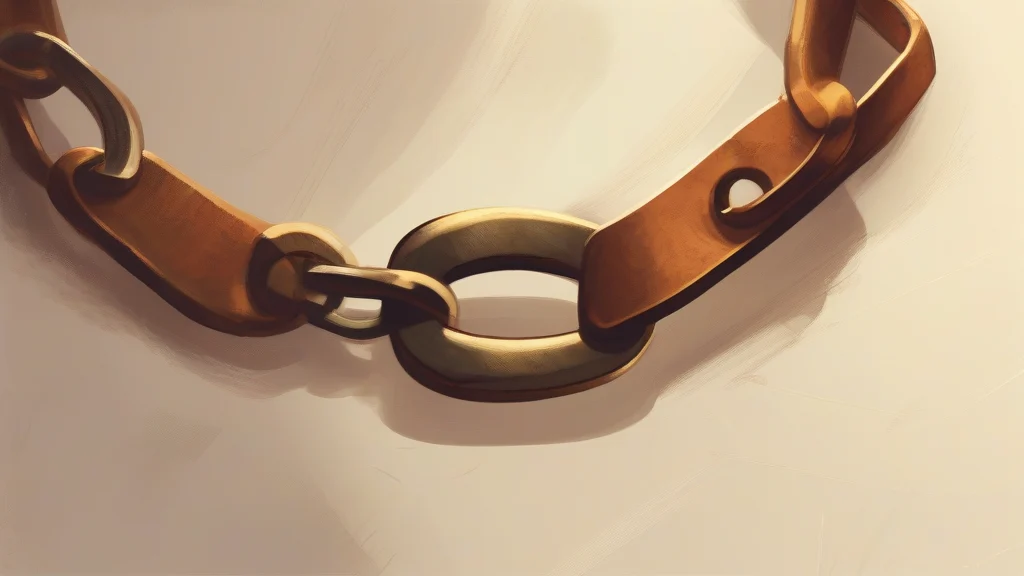
A device, usually of metal, that fastens two things together or keeps an object closed.
"The jeweller replaced the broken clasp on her grandmother's pearl necklace."
To hold something or someone tightly with the hand or arms; also to fasten with a clasp.
"She clasped the letter to her chest before finally reading it."
When used for physical gripping, clasp often implies emotional intensity or tenderness rather than simple practical holding.
Standard plural; used when referring to multiple fasteners or instances of gripping.
"Each of the three purses had its own ornate brass clasps."
The word clasp shares its ancient root with 'enclose' — every time you clasp your hands, you are literally closing them around each other.
Reviewed by Deb Chak, Editor. AI-assisted content curated by RJS Tech Solutions LLP.
Etymology of clasp
Clasp entered English in Middle English, likely from Old English 'clyccan' or a related Germanic source meaning to embrace or hold. Its deeper ancestry ties it to the Proto-Germanic root *kluk-, connected to the idea of enclosing or shutting in, making it a distant cousin of words like enclose and include through the broader family of 'close'-related terms. The noun sense of a fastening device developed naturally from the action of gripping or holding shut, and by early modern English both senses were well established.
Related word forms
How clasp is actually used
As a verb, 'clasp' carries a slightly formal or literary register compared to everyday alternatives like 'hold' or 'grip', and it often connotes emotion — comfort, affection, anxiety, or reverence — especially when referring to hands. In British English, the vowel in the first syllable is typically /ɑː/ (/klɑːsp/), while American English uses /æ/ (/klæsp/).
Easily confused with clasp
A clasp is primarily a physical fastening device, while clutch refers to gripping tightly with the hand or claws and has no noun form meaning 'fastener' in this sense.