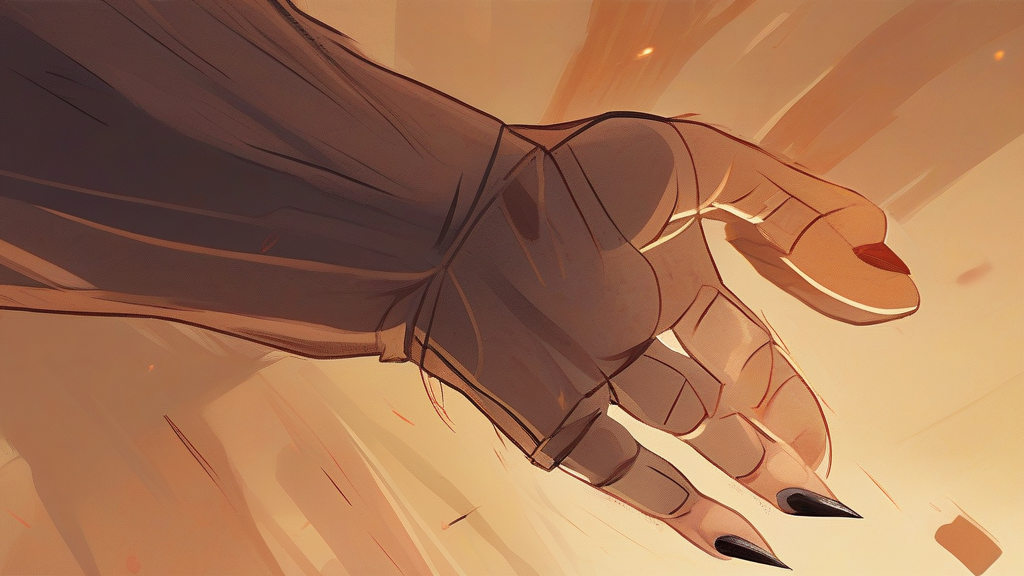
What does clawer mean?
A clawer is simply an agent that claws — a person, animal, or creature equipped with claws or fingernails that scratches, grips, or tears with them. The word belongs to a small family of English agent nouns formed by adding '-er' to an action verb, much like 'runner' from 'run' or 'builder' from 'build', though unlike those it remains genuinely uncommon. In practice you are most likely to meet it in casual or descriptive contexts: a cat that shreds the sofa is a clawer, a badger excavating its sett is a clawer, and a fretful infant raking at a parent's arm is a clawer too. Because the word carries the vivid image of sharp nails at work, it tends toward slightly playful or affectionate connotations rather than formal ones. Writers who need precision usually fall back on the verb 'to claw' instead, which makes the noun a charming, if rarely exercised, corner of the English lexicon.
nounA clawer is a person or animal that claws — that scratches, grips, or tears with claws or fingernails.
- A person or animal that claws, scratches, or grips with claws or fingernails.
"The cat was such an enthusiastic clawer that every armchair in the house bore the marks of her affection."
"The toddler, an eager little clawer, left red trails down her grandfather's forearm."
"Bred for digging, the badger is a relentless clawer that can excavate its own weight in soil within minutes."
Standard regular plural; used when referring to multiple individuals or animals characterized by clawing.
"Among birds of prey, eagles are among the most powerful clawers."
Every cat owner knows one intimately, yet 'clawer' almost never appears in print — it lives mostly in the wilds of everyday speech.
Reviewed by Deb Chak, Editor. AI-assisted content curated by RJS Tech Solutions LLP.
Etymology of clawer
Clawer derives straightforwardly from the verb 'claw' combined with the agentive suffix '-er', a productive pattern in English for naming whoever performs an action. The root word 'claw' goes back to Old English 'clāw(u)', meaning a claw or talon, and is cognate with Dutch 'klauw' and German 'Klaue', all stemming from a common Germanic source. The agent-noun formation itself is ancient and unremarkable in structure, which is why the word, while old in principle, never developed any specialized senses of its own.
How clawer is actually used
This is a rare agent noun formed from the verb 'claw'. It appears far more often in informal speech and descriptive writing than in formal prose, where writers usually rephrase using the verb itself (e.g. 'it claws' rather than naming a clawer).
Easily confused with clawer
A crawler creeps or moves slowly on hands and knees (or is an automated web program), while a clawer scratches or tears with claws or nails.
'Claw' is the nail or talon itself, or the act of scratching; 'clawer' names the agent — the one doing the clawing.