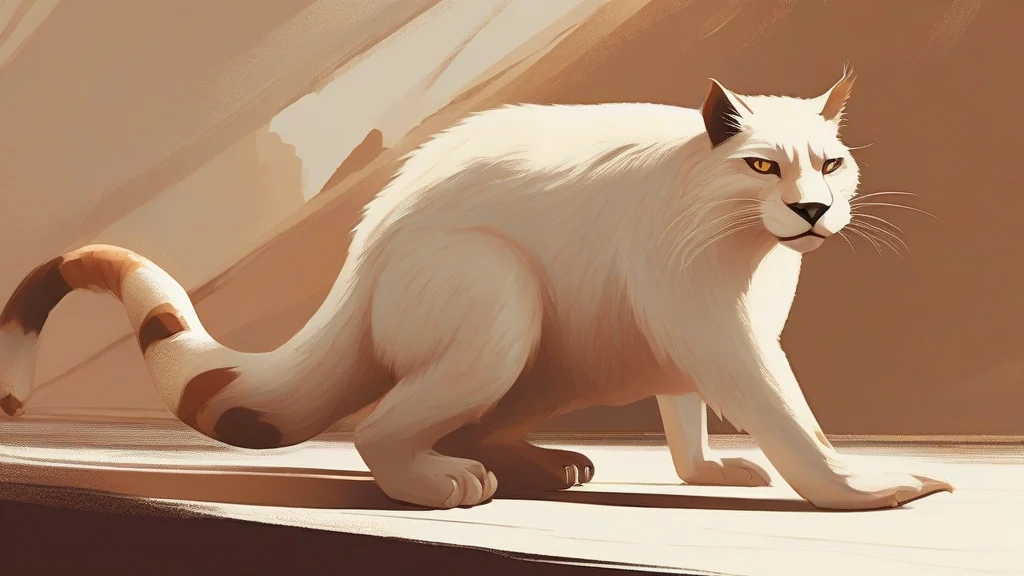
What does clawless mean?
"Clawless" is an adjective meaning having no claws. It is formed by adding the suffix "-less" to the noun "claw," following a productive English pattern for expressing absence (as in "toothless" or "tailless"). The word is used chiefly in zoology and natural-history writing to describe animals that lack the curved, pointed appendages characteristic of their kind — for example, certain lobsters and crabs that have lost or never developed pincers, or otters whose forepaws bear no true claws. It also appears fixed in the common names of particular species, such as the African clawless otter, whose bare, highly sensitive fingers aid it in feeling along riverbeds for food. The term is neutral in tone and largely descriptive; it rarely carries figurative meaning, though writers occasionally use it metaphorically to suggest harmlessness or disarmed power. Its antonyms, "clawed" and "taloned," restore the very feature the word denies.
adjectiveHaving no claws; lacking the curved, pointed keratinous digits typical of many animals.
- Lacking claws, said especially of animals such as certain otters, crabs, and lobsters that normally have them.
"The African clawless otter uses its sensitive, dexterous forepaws rather than sharp talons to feel for prey in riverbeds."
"The slipper lobster is sometimes described as a clawless crustacean, relying on its flattened antennae for defense."
"Veterinarians noted that the declawed cat was effectively clawless in its front paws."
Some animals are named "clawless" precisely because scientists wanted you to notice the one thing they're missing — like the African clawless otter, whose bare, sensitive fingertips work almost like human hands.
Reviewed by Deb Chak, Editor. AI-assisted content curated by RJS Tech Solutions LLP.
Etymology of clawless
The word combines "claw," which descends from Old English "clawu" and is related to Old Norse "klō" and modern German "Klaue," with the native suffix "-less," from Old English "-lēas" meaning "free from" or "without." As a transparent formation, "clawless" arose within English itself rather than being borrowed, and its history follows that of the widespread "-less" pattern used across English adjectives of absence.
How clawless is actually used
Mostly used in zoological and descriptive contexts rather than everyday conversation; often appears as part of an animal's common name.
Easily confused with clawless
"Flawless" means perfect or without defects, while "clawless" refers specifically to the absence of claws.