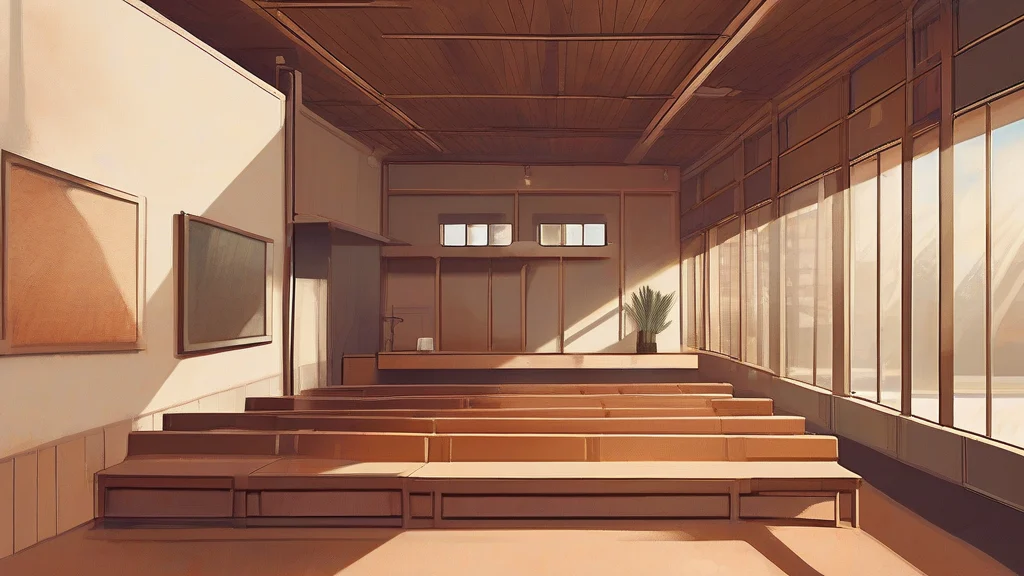
What does clerestory mean?
A clerestory is an architectural feature consisting of an upper level of windows set high in a wall, above the rooflines of adjacent lower sections such as aisles or side wings. Its purpose is to let natural light — and often fresh air — penetrate deep into the interior of large buildings, particularly the naves of churches and cathedrals. The term comes from the idea of a 'clear' storey, one open to light. Clerestories are among the most distinctive elements of Gothic architecture, where tall, traceried windows transformed cathedrals into luminous spaces, but the device predates the Gothic era, appearing in ancient Egyptian temples and Roman basilicas. Today the term also appears in modern design, where clerestory windows are valued for passive lighting and ventilation in homes and public buildings. Though technical in register, the word is useful for anyone discussing architecture, historic buildings, or daylighting design.
nounA clerestory is an upper section of wall in a building, containing a row of windows above adjacent rooflines, designed to admit light and sometimes air into the central interior space.
- An upper zone of a building's wall pierced by windows above adjoining rooflines, admitting light into the central space.
"Morning light poured through the cathedral's clerestory, illuminating the nave far below."
"The Romanesque church featured a triple-arched clerestory above the triforium."
"Modern passive-solar homes often use a south-facing clerestory to reduce the need for artificial lighting."
Standard English plural; British writers using the variant 'clerestorey' form the plural 'clerestoreys'.
"The basilica's two great clerestories were added during the twelfth-century rebuilding."
A clerestory is literally the 'clear story' of a building — the windowed upper level that medieval architects invented to flood vast stone cathedrals with daylight before electricity existed.
Reviewed by Deb Chak, Editor. AI-assisted content curated by RJS Tech Solutions LLP.
Etymology of clerestory
The word 'clerestory' combines 'clear' (from Old French 'cler', ultimately from Latin 'clarus', meaning bright or light) with 'story', the older English term for a level or floor of a building (cognate with 'storey'). It entered English in the early modern period, around the late 16th or early 17th century, when architectural terminology was being formalized. It shares its Latin root 'clarus' with words such as 'clarify', 'clarity', and 'declare'.
Related word forms
How clerestory is actually used
Primarily a technical term used in architecture, art history, and building design; rare in everyday conversation. The variant spellings 'clearstory' and British 'clerestorey' exist but are less common than 'clerestory'.
Easily confused with clerestory
The second element of 'clerestory' derives from 'story' meaning a level or floor of a building (spelled 'storey' in British English), not from 'story' meaning a tale.