What does clivia mean?
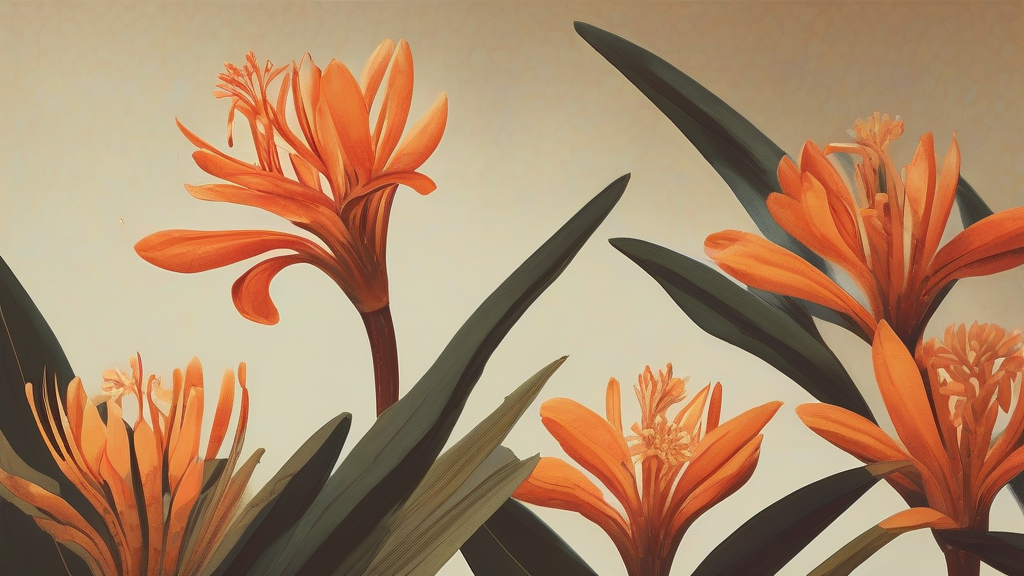
A clivia is a striking flowering perennial native to southern Africa, belonging to a small genus of evergreen plants prized for their bold clusters of trumpet-shaped blooms in shades of orange, red, apricot, and yellow. Rising above broad, dark green, strap-like leaves on sturdy stems, the flowers typically appear in late winter or spring, making the plant a favorite for bringing color indoors during colder months. In horticulture, clivias are valued for being tough, shade-tolerant, and long-lived, thriving in pots with minimal attention, though they bloom best when slightly root-bound and given a cool, dry rest period. The best-known species, Clivia miniata, is commonly called the bush lily or Natal lily. Gardeners prize rare yellow forms, which can command high prices among collectors. Whether on a windowsill or in a shaded garden bed, a well-grown clivia offers reliable, vivid seasonal display year after year.
nounA clivia is a plant of a southern African genus of evergreen perennials, bearing clusters of funnel-shaped orange, red, or yellow flowers on stout stems, widely grown as houseplants and garden ornamentals.
- Any plant of the genus Clivia, especially Clivia miniata, an evergreen southern African perennial grown for its clusters of orange to yellow trumpet-shaped flowers; also called bush lily.
"The clivia on her windowsill bloomed again in late winter, its trumpet-shaped orange flowers brightening the whole room."
"She divided the crowded clivia into three pots after it outgrew its container."
"The shaded border came alive each spring with drifts of yellow-flowered clivias."
The regular English plural clivias is standard in general usage; the Latinate form cliviae appears only rarely in specialist botanical writing.
"The greenhouse was filled with clivias in full bloom."
Every clivia in the world traces back to specimens collected in South Africa and named in honor of Lady Charlotte Clive, whose London conservatory flowered the first ones ever grown in Europe.
Reviewed by Deb Chak, Editor. AI-assisted content curated by RJS Tech Solutions LLP.
Etymology of clivia
The word clivia comes from New Latin Clivia, the scientific genus name coined in the mid-nineteenth century by botanist John Lindley in honor of Lady Charlotte Florentia Clive, Duchess of Northumberland, in whose conservatory specimens first sent from South Africa were successfully flowered. As a eponymous coinage, it has no cognates in other languages beyond direct borrowings of the same botanical name.
How clivia is actually used
Clivia is used almost exclusively in horticultural and gardening contexts, in both formal botanical writing and everyday gardeners' speech. The standard plural is clivias, though the Latinate cliviae occasionally appears in specialist literature. Because the word names a genus, it may refer to the group collectively or to an individual plant.
Easily confused with clivia
Clivias are frequently sold under the amaryllis name because both are bulbous-looking southern African ornamentals, but true amaryllis (Hippeastrum) has large showy blooms on tall hollow stems, while clivia has compact heads of smaller trumpet flowers and strap-like evergreen leaves.