What does clockface mean?
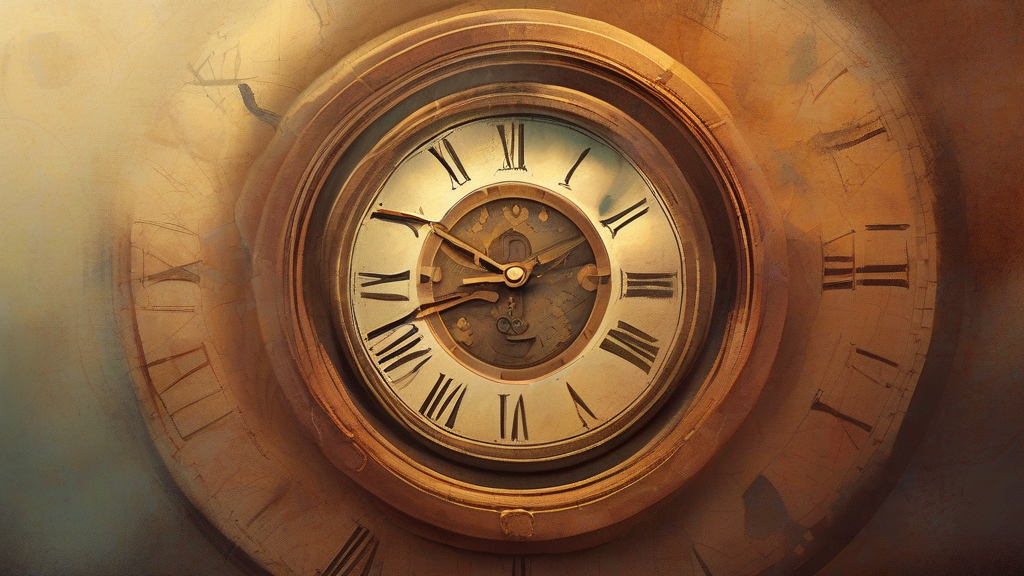
A clockface is the visible front surface of a clock — the plate marked with numerals, Roman figures, or other hour indicators across which the hands sweep to show the time. It is the part of a clock most people actually look at, which has made the clockface an enduring design object: station clocks, church-tower dials, minimalist wall pieces, and even digital imitations of analog faces all hinge on this single surface. In everyday use the word is straightforwardly descriptive, but it also carries figurative weight in phrases like 'a clockface of a moon', evoking anything round and pale. Designers and horologists often prefer the shorter term 'dial', reserving 'clockface' for general description. Its component 'clock' descends from the medieval Latin 'clocca', meaning bell — a reminder that the earliest mechanical timekeepers were heard before they were seen.
nounThe flat front surface of a clock, marked with numerals or hour markers and bearing the hands that indicate the time.
- The marked front surface of a clock on which its hands indicate the time.
"The station's great clockface showed five minutes to midnight as travellers hurried to their trains."
"She glanced up at the ornate clockface above the platform and realised she had missed her train."
"The designer chose a minimalist clockface with no numerals at all, just slender hands against brushed steel."
Regular plural, used when referring to multiple clocks or to designs considered collectively.
"All the clockfaces in the terminal were synchronised to the second."
The word 'clock' traces back to the medieval Latin 'clocca', meaning bell — because early clocks announced the hours by ringing long before they had faces you could actually read.
Reviewed by Deb Chak, Editor. AI-assisted content curated by RJS Tech Solutions LLP.
Etymology of clockface
The compound 'clockface' joins 'face' (from Latin 'facies') with 'clock', whose ultimate source is the medieval Latin 'clocca', meaning bell — so called because early mechanical timepieces signalled the hours by striking rather than displaying them. As dials with moving hands became standard in later centuries, English speakers naturally combined the two elements to name the readable surface of the instrument.
How clockface is actually used
A neutral, everyday term used in both casual and technical contexts — horologists may simply say 'dial' when discussing the decorated plate bearing the numerals, while 'clockface' is more common in general speech and writing. The spelling is usually closed ('clockface'), though it occasionally appears hyphenated or as two words.
Easily confused with clockface
'Clockwise' describes movement in the same direction as a clock's hands rotate, while 'clockface' is the noun for the clock's marked front surface.