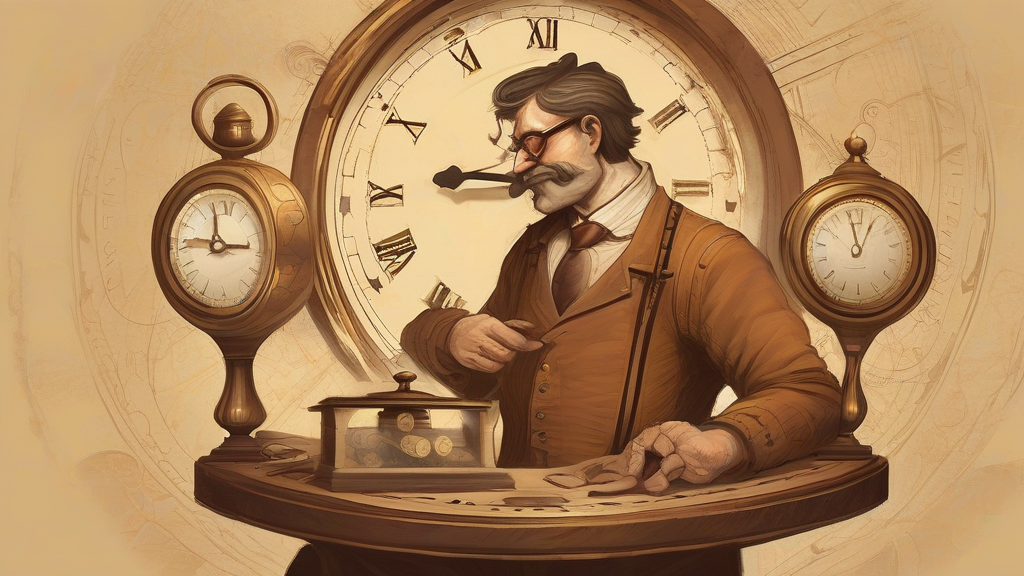
What does clockmaker mean?
A clockmaker is a craftsperson who designs, builds, or repairs clocks — the mechanical timekeeping devices that range from small mantel pieces to grand tower installations. The term most often refers to someone working in the traditional manner, hand-assembling gears, escapements, and pendulums with precision tools. Historically, clockmakers held an honoured place in their communities: before mass production, every town of consequence needed a skilled artisan to build, install, and maintain its public clocks, and the finest makers achieved reputations rivaling those of artists. The trade overlaps with horology, the broader study and craft of measuring time, though a clockmaker specifically focuses on clocks rather than watches. Today, while factory-made timepieces dominate, clockmakers survive as restorers, conservators, and bespoke craftsmen, keeping alive techniques passed down over centuries.
nounA person who makes or repairs clocks, especially one skilled in the traditional craft of clock construction.
- A person whose trade is making clocks.
- A person who repairs and maintains clocks.
"The village clockmaker spent weeks restoring the church tower's ancient mechanism."
"The old clockmaker adjusted the pendulum with steady hands."
"She apprenticed under a renowned clockmaker in Switzerland."
Standard regular plural; used both for individual practitioners collectively and for members of the historical trade.
"Many 18th-century clockmakers signed their work, making their pieces identifiable today."
Before factories, a town's clockmaker was often its most trusted craftsman — the person everyone relied on to keep life running on time.
Reviewed by Deb Chak, Editor. AI-assisted content curated by RJS Tech Solutions LLP.
Etymology of clockmaker
Clockmaker is a straightforward English compound of 'clock' and 'maker', formed during the period when mechanical timekeeping spread through Europe. The word 'clock' itself entered Middle English in the 14th century, likely from Middle Dutch 'klocke' or Old Northern French 'cloque' (bell), ultimately imitative of a bell's sound. The '-maker' suffix is a common English agentive formation. As clocks became widespread domestic objects between the 17th and 19th centuries, the compound became the standard term for the specialist who built them.
Related word forms
How clockmaker is actually used
The word is neutral in register. It traditionally refers to a craftsperson, and the related term 'horologist' covers both clockmakers and watchmakers more broadly.
Easily confused with clockmaker
A watchmaker specializes in making and repairing watches, while a clockmaker works on clocks, which are larger timekeeping devices.