
What does clodding mean?
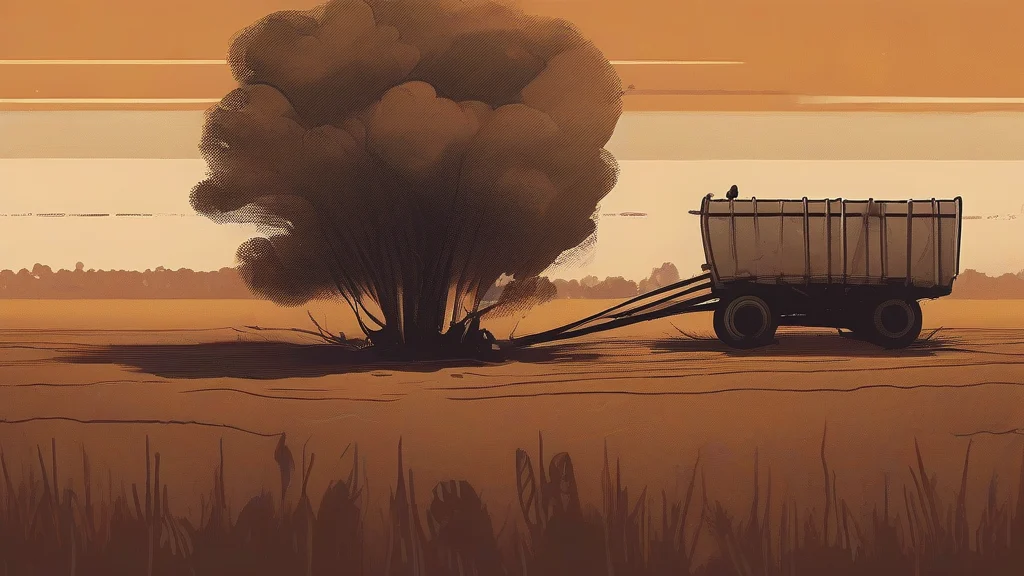
"Clodding" is the present participle of the verb "clod," a word rooted deep in Old English. In its primary, agricultural sense, it describes working lumps of earth — clods — into or out of soil, as when a farmer breaks up or covers freshly turned ground before planting. By extension it can describe movement that is heavy, clumsy, or plodding, echoing the figurative sense of a "clod" as a slow-witted or graceless person, familiar from words like "clodhopper." The term is uncommon in contemporary usage, surviving mainly in rural speech and agricultural writing, and it carries a plain, unpretentious, slightly old-fashioned flavor. Its etymological relatives are surprisingly distinguished: "clot," "clout," and even "cloud" all trace back to the same Germanic root meaning a rounded mass or lump, making this humble farming word part of one of English's oldest word families.
To cover or break up ground with clods of earth; to work lumps of soil into land, especially in preparation for planting.
"They were still clodding the north field when the rain began."
Chiefly dialectal or rural; rarely encountered in general modern usage.
To move or proceed in a heavy, clumsy manner.
"Someone was clodding about overhead all night."
This figurative sense aligns with the noun "clod" meaning a dull or clumsy person.
The humble clod gave us not just "clodhopper" for a clumsy rustic, but — through Old English — even the word "cloud" itself, once imagined as a great lump of matter in the sky.
Reviewed by Deb Chak, Editor. AI-assisted content curated by RJS Tech Solutions LLP.
Where does clodding come from?
"Clod" descends from Old English "clod" or "clott," meaning a round mass or lump, and belongs to a Germanic word-group that also produced "clot" and "clout." Remarkably, the word "cloud" shares this ancestry: originally referring to a mass of rock or earth, it was transferred to the sky. The verb form arose in English agricultural usage, giving rise to "clodding" as its participle, while compounds like "clodhopper" developed from the figurative sense of a person as heavy-footed as the soil they worked.
Related word forms
How clodding is actually used
"Clodding" is rare and chiefly rural or dialectal in modern English. Most speakers today encounter only the noun "clod" and its derivatives like "clodhopper." When used, it carries a plain, earthy register and can sound slightly old-fashioned outside agricultural contexts.
Easily confused with clodding
Cladding is a protective outer layer fixed to a building, whereas clodding refers either to working lumps of earth into soil or moving in a clumsy way.
Coddling means treating someone with excessive care or gentleness, nearly the opposite in spirit of clodding's earthy, heavy connotations.