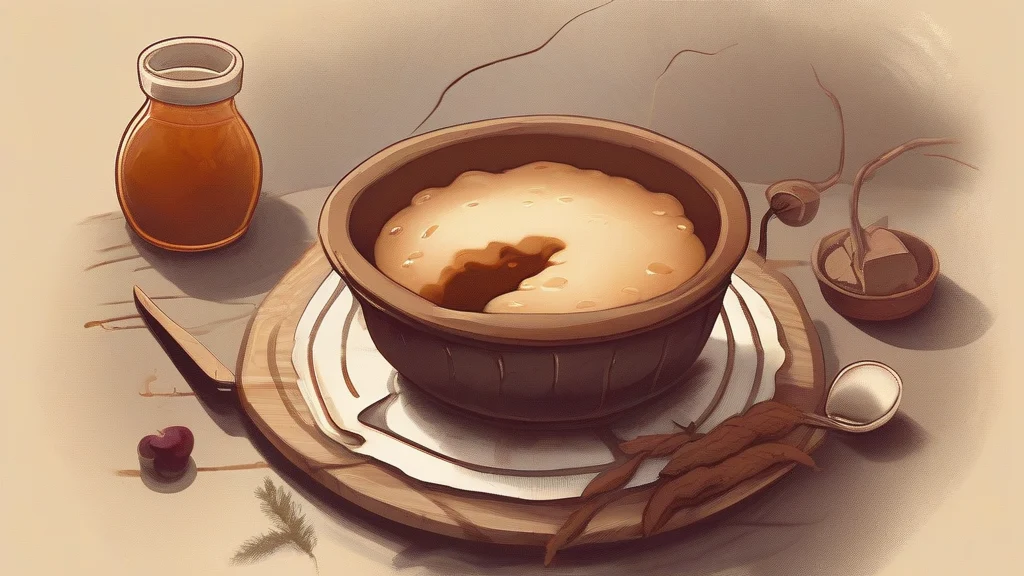
What does clootie mean?
Clootie is a Scots dialect word with two main lives. In folklore, it names the Devil — 'Auld Clootie' — a nickname derived from 'cloots', the Scots term for cloven hoofs, since the Devil was traditionally imagined with the feet of a goat. More familiarly to most people today, a clootie is a traditional Scottish pudding: a dense, spiced mixture of flour, suet, dried fruit, and treacle wrapped in a floured cloth ('a cloot') and boiled for hours, often served at celebrations such as birthdays and Christmas. Relatedly, strips of cloth offered at healing springs are known as clooties, giving rise to sites like the famous clootie wells of Scotland. The word is strongly regional and evocative, carrying connotations of hearth, heritage, and old superstition. For readers interested in British foodways or folk belief, clootie offers a compact window into how one small word can tie together cuisine, ritual, and the figure of the Devil himself.
The Devil; an evil spirit (Scots dialect, from 'cloots' = cloven hoofs).
"The crofter swore the lost cattle had been led astray by Auld Clootie."
Usually encountered in the fixed phrase 'Auld Clootie'.
A traditional Scottish spiced fruit pudding boiled in a cloth; also, a strip of cloth tied at a healing well in folk ritual.
"She steamed the clootie for four hours before turning it out onto a plate."
Most commonly met in the compounds 'clootie dumpling' and 'clootie well'.
The plural typically refers to multiple cloth offerings at a well or, informally, to several puddings.
"Visitors still hang clooties on the branches beside the spring."
Scotland's most famous pudding gets its name from the cloth it's boiled in — but the same word also names the Devil, thanks to his cloven hoofs.
Reviewed by Deb Chak, Editor. AI-assisted content curated by RJS Tech Solutions LLP.
Etymology of clootie
Clootie derives from 'cloot', a Scots and Northern English word meaning a cloven hoof or, by extension, a piece of cloth. 'Cloot' traces back through Middle English to Old English 'clōt', meaning a lump or mass, which also gives us related words such as 'clot', 'clout', and 'cleat'. The sense referring to the Devil arose because Satan was traditionally depicted with cloven hoofs, while the culinary sense comes from the cloth in which the pudding is boiled.
How clootie is actually used
The word is distinctly Scots and carries strong regional flavour; outside Scotland it appears mainly in discussions of Scottish food traditions or folklore. 'Auld Clootie' is a familiar personification of the Devil in Scots speech and literature.
Easily confused with clootie
A clout is a blow or a piece of cloth, whereas a clootie is either the Devil or a Scottish pudding boiled in a cloth.