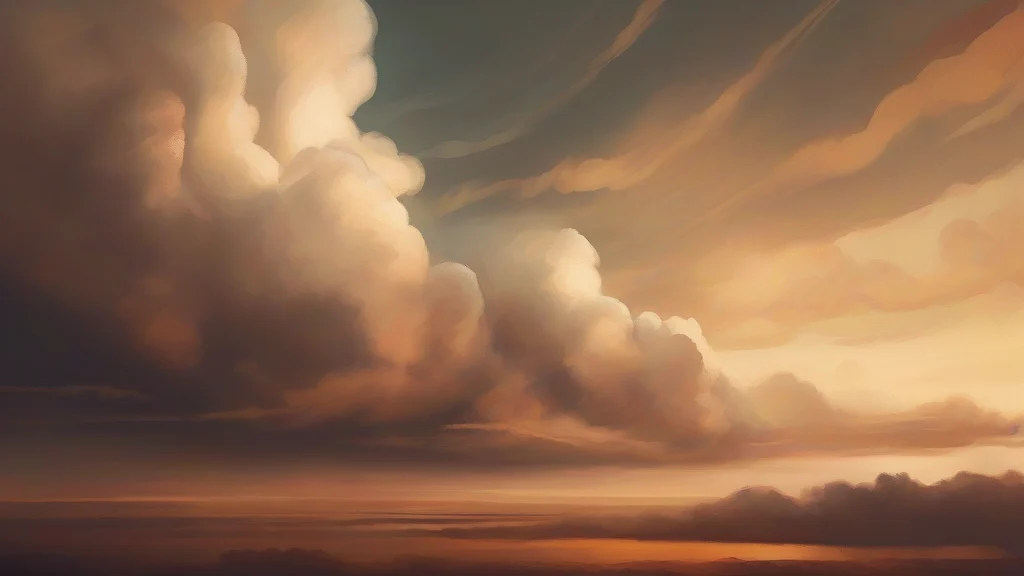
What does cloudscape mean?
A cloudscape is a view or depiction of clouds, treated as a scene worthy of attention in its own right. The word combines "cloud" with "-scape," the same suffix found in "landscape" and "seascape," and it emerged in nineteenth-century Britain, when Romantic painters such as John Constable and J. M. W. Turner made systematic studies of the sky and elevated cloud formations into legitimate pictorial subjects. Today the term appears chiefly in art criticism, photography, and descriptive nature writing: a photographer might wait hours to capture a dramatic sunset cloudscape, while a critic might praise a painting for its turbulent cloudscape rather than its figures or terrain. Because it frames the sky as a composition — something composed, changing, and visually striking — the word carries a distinctly aesthetic connotation. It remains somewhat literary in register but is instantly understood by general readers.
nounA view or artistic representation of clouds, especially one regarded for its beauty or dramatic effect; the sky as a scene dominated by cloud formations.
- A picturesque or dramatic view of clouds in the sky, whether observed directly or depicted in art or photography.
"The painter spent his later years devoted almost entirely to the cloudscape above the moors."
"From the summit we watched an ever-shifting cloudscape roll in from the west."
"Turner's late seascapes are as much about the cloudscape as the water below it."
The plural follows standard English noun inflection and is common when referring to multiple depictions or successive views of clouds.
"The gallery hung three Turners side by side, each capturing different cloudscapes at dusk."
Coined by a Victorian art critic, 'cloudscape' gave painters a word for treating the sky itself — not just the land beneath it — as the subject of a picture.
Reviewed by Deb Chak, Editor. AI-assisted content curated by RJS Tech Solutions LLP.
Etymology of cloudscape
Cloudscape was formed in English in the nineteenth century from the noun "cloud" combined with the suffix "-scape," borrowed ultimately from Dutch "-schap" (as in "landschap," which gave English "landscape"). It belongs to the same family of coinages as "seascape" and, later, "cityscape." Its emergence reflects the Romantic era's fascination with meteorology and with the sky as an artistic subject, popularized in part by art criticism of painters who specialized in cloud studies.
How cloudscape is actually used
The word carries an aesthetic, often painterly connotation and appears most frequently in art criticism, nature writing, and photography contexts rather than everyday conversation. It is somewhat literary in register.
Easily confused with cloudscape
A landscape is a view of land or terrain, while a cloudscape is a view of clouds in the sky.