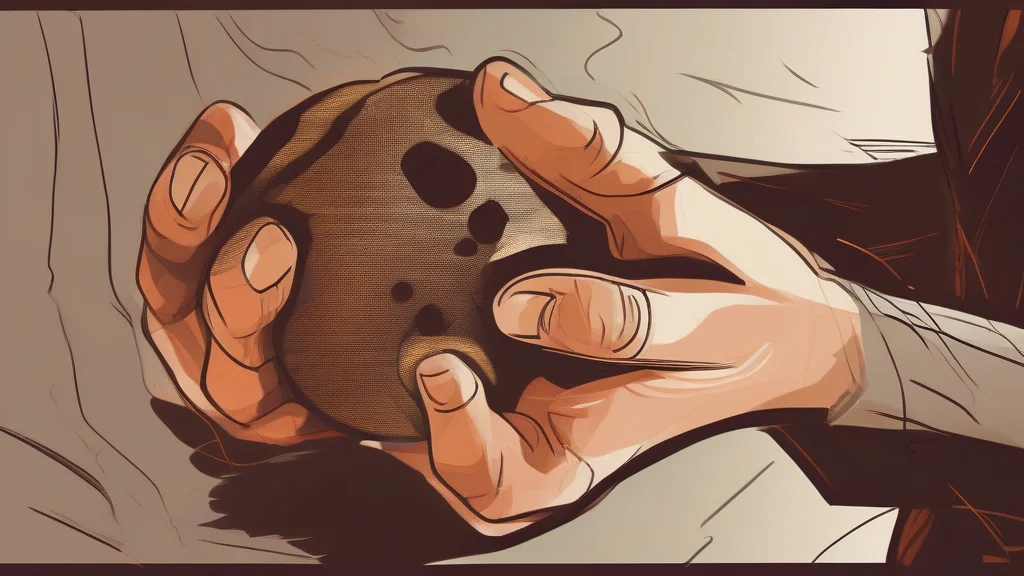
What does clutching mean?
"Clutching" is the present participle of the verb "to clutch," meaning to grasp or hold something tightly, typically with the hands. It most often appears when the grip carries emotional weight: a nervous passenger clutching an armrest, a grieving relative clutching a photograph, a child clutching a parent's sleeve. Because of this, the word tends to suggest fear, anxiety, protectiveness, or desperation rather than simple possession — one grips a hammer, but clutches a lifeline. It also survives in the well-worn idiomatic phrase "clutching at straws," which describes someone seizing on the flimsiest hopes or excuses in a desperate situation. Derived from Old English roots meaning to clench or grasp, the word has been part of everyday English for centuries and remains common in both British and American usage. Its vividness makes it a favorite of fiction writers who want to show emotion through physical action.
verb (present participle)The present participle of "clutch": to grasp or hold something tightly, especially with the hands, often out of fear, anxiety, or desperation.
- To grip or hold something tightly, often with fear or anxiety behind it
- (figurative) To seize desperately at a hope or excuse, as in 'clutching at straws'
"She stood at the edge of the platform, clutching her bag to her chest."
"He was clutching the railing as the train lurched forward."
"Accused of missing the deadline, she began clutching at excuses that convinced no one."
'Clutching at straws' has been English idiom since the seventeenth century — proof that desperate hope has always looked a little undignified.
Reviewed by Deb Chak, Editor. AI-assisted content curated by RJS Tech Solutions LLP.
Etymology of clutching
"Clutching" derives from the verb "clutch," which comes from Middle English "clucchen," a frequentative variant related to Old English verbs meaning to clench or claw. It has been in continuous use since the Middle Ages, originally describing the physical act of closing the hand tightly on something. The figurative sense of grasping desperately at intangibles developed naturally from this, giving rise by the seventeenth century to phrases such as "clutching at straws." It is distantly related to other hand-action words like "clench."
Related word forms
How clutching is actually used
Often carries connotations of fear, protectiveness, or desperation — a person clutching something suggests urgency rather than casual possession. The figurative phrase 'clutching at straws' is firmly idiomatic in both British and American English.
Easily confused with clutching
A crutch is a support used to help someone walk, while clutching means gripping tightly; the words look similar but are unrelated in meaning.