What does coachwork mean?
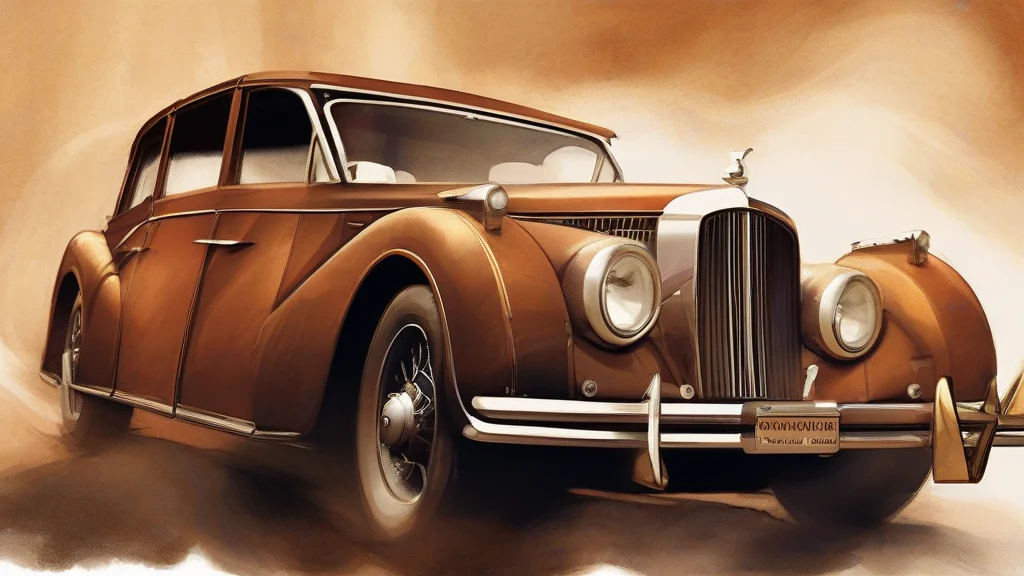
Coachwork is the body of a motor vehicle or horse-drawn carriage — the passenger compartment and outer shell mounted on a separate chassis. The term descends from the era when wealthy customers bought a bare rolling chassis from an automaker and had a specialist firm, known as a coachbuilder, design and construct the body to their specification. Because these bodies were frequently shaped and finished by hand, coachwork became associated with luxury, elegance, and artisanal skill, and it remains a hallmark word in the world of classic and collector cars. Marques celebrated for their coachwork are prized at concours d'élégance events, where originality and quality of the body are judged closely. In modern usage the word appears mainly in automotive journalism, auction catalogues, and enthusiast writing; for everyday vehicles, speakers typically say bodywork instead. Coachwork therefore signals heritage craftsmanship more than mere structure.
nounThe body of a motor vehicle or carriage, especially when built by a specialist manufacturer rather than the chassis maker. The term is most often applied to custom-built or luxury automobile bodies.
- The body of a motor vehicle or horse-drawn carriage, especially one built by a specialist coachbuilder; the craft or product of such body construction.
"The vintage Rolls-Royce was admired as much for its handcrafted coachwork as for its engineering."
"The concours judges praised the car's flawless coachwork, finished in deep burgundy lacquer."
"In the early twentieth century, wealthy buyers ordered rolling chassis and commissioned elegant coachwork from independent firms."
The plural is rare and usually appears in historical or commercial contexts, sometimes referring collectively to multiple bodies produced by a coachbuilder.
"The museum displayed coachworks from several celebrated interwar coachbuilders."
Before carmakers stamped their own bodies, firms like Mulliner and Pininfarina dressed bare chassis in bespoke 'coachwork' — a craft inherited directly from the horse-drawn carriage trade.
Reviewed by Deb Chak, Editor. AI-assisted content curated by RJS Tech Solutions LLP.
Etymology of coachwork
The word combines "coach," meaning a carriage, with "work." "Coach" itself entered English in the sixteenth century from French coche, ultimately derived from the Hungarian village of Kocs, whose light carriages gave their name to the vehicle type across Europe. As motoring emerged in the late nineteenth and early twentieth centuries, the carriage-building trade simply transferred its skills to automobiles, and "coachwork" came to denote the body fitted to a motor chassis. Related forms include coachbuilder, coachbuilding, and coachbuilt.
How coachwork is actually used
"Coachwork" carries a connotation of craftsmanship, luxury, and tradition; it is most at home in discussions of classic, vintage, and bespoke automobiles. In everyday talk about ordinary cars, "bodywork" is the usual word.
Easily confused with coachwork
Bodywork refers to any vehicle's outer body panels generally, while coachwork specifically denotes the body of a vehicle, traditionally one crafted by a specialist coachbuilder.
Coaching means instruction or training, whereas coachwork is the constructed body of a vehicle.