What does coalfield mean?
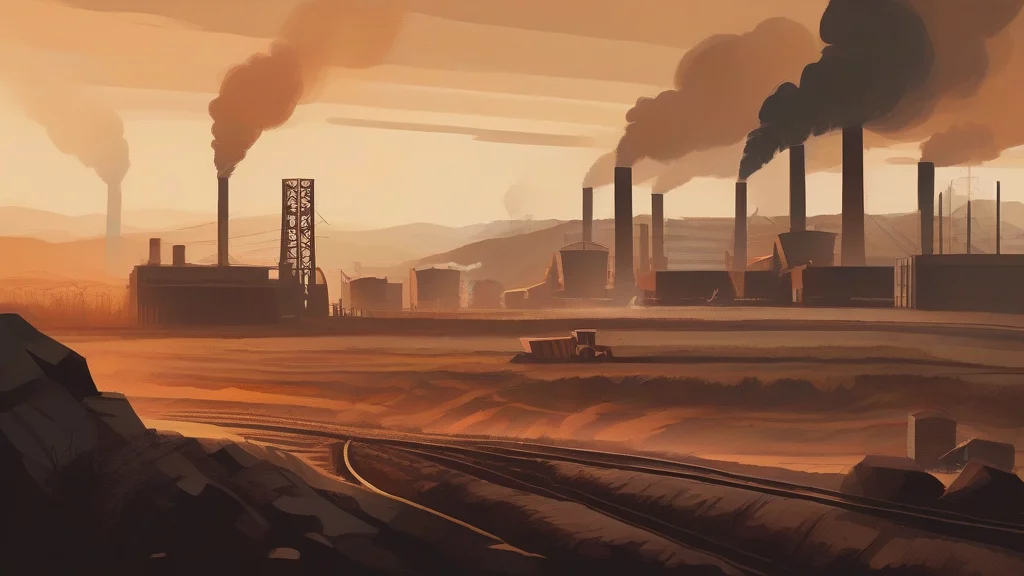
A coalfield is an extensive geographic region in which coal occurs in commercially workable quantities and is, or has been, systematically mined. The term refers not to a single mine but to the broader area underlain by coal-bearing rock strata — a coal basin or seam system that may host dozens of individual collieries. Coalfields are central to industrial history: the great coalfields of northern England, South Wales, the Ruhr valley, and Appalachia fueled the growth of modern industry and gave rise to entire towns whose economies depended on extraction. In contemporary usage the word appears frequently in journalism, geography, and economic history, often tinged with connotations of industrial decline, since many traditional coalfields have contracted or closed. Related terms include 'colliery', which denotes a single coal mine, and 'coal basin', used more technically in geology. The word is standard in both British and American English, though it is especially characteristic of British writing about mining heritage.
nounA region or district in which coal is mined on a large scale; an area of land under which deposits of coal are found and worked.
- A geographical region where coal is extracted commercially, especially as an extensive underground deposit.
- The coal-bearing strata or reserve of coal underlying such a region.
"The closure of the Yorkshire coalfield devastated communities that had depended on mining for generations."
"The Ruhr coalfield powered Germany's industrial expansion for over a century."
"Geologists surveyed the newly discovered coalfield before any drilling began."
Regular plural. Used when referring to multiple distinct coal-mining regions, e.g., comparing the industrial output of several coalfields.
"Britain's coalfields once employed hundreds of thousands of miners."
Whole towns in Britain were built on top of coalfields — and when the seams closed, those towns sometimes vanished with them.
Reviewed by Deb Chak, Editor. AI-assisted content curated by RJS Tech Solutions LLP.
Etymology of coalfield
Coalfield is a transparent compound of 'coal' and 'field'. 'Coal' derives from Old English 'col', meaning charred or burning substance, from Proto-Germanic '*kulam'; it has cognates across Germanic languages including Dutch 'kool' and German 'Kohle'. 'Field' comes from Old English 'feld', meaning open or cultivated land, also of Germanic origin. The compound formed in English during the industrial period, when large-scale coal mining made it useful to name entire districts by their mineral wealth. Its Germanic roots make it a native English formation rather than a borrowing from Latin or French, unlike many other geological terms.
How coalfield is actually used
Most often used in British English, particularly in historical, industrial, and economic contexts surrounding the coal industry. The word carries strong connotations of the industrial era and its decline, especially in reference to former mining regions. It is a formal-to-neutral register word, common in journalism, geography, and economic history writing.
Easily confused with coalfield
A colliery is a single coal mine and its associated buildings, whereas a coalfield is the whole geographic region containing many such mines.