What does cobwebbed mean?
"Cobwebbed" is an adjective describing something literally covered with cobwebs — the dusty, silken strands left behind by spiders. It evokes abandonment and neglect: an untouched attic, a disused cellar, or a shuttered room is typically described as cobwebbed. The word also has an established figurative sense, applied to thoughts, memories, or institutions that have grown stale, sluggish, or out of date; English speakers commonly speak of "blowing away the cobwebs" to mean refreshing one's thinking, or of "cobwebbed" bureaucracy that resists change. Derived simply from the noun "cobweb" plus the adjectival suffix "-ed," it belongs to a family of vivid descriptive participles (like "rusted" or "dust-covered") that let writers convey atmosphere economically. Whether literal or figurative, "cobwebbed" always suggests time passing without care — a space, or a mind, that has been left alone long enough for the spiders to move in. It is standard in both British and American English and suits both everyday description and literary prose.
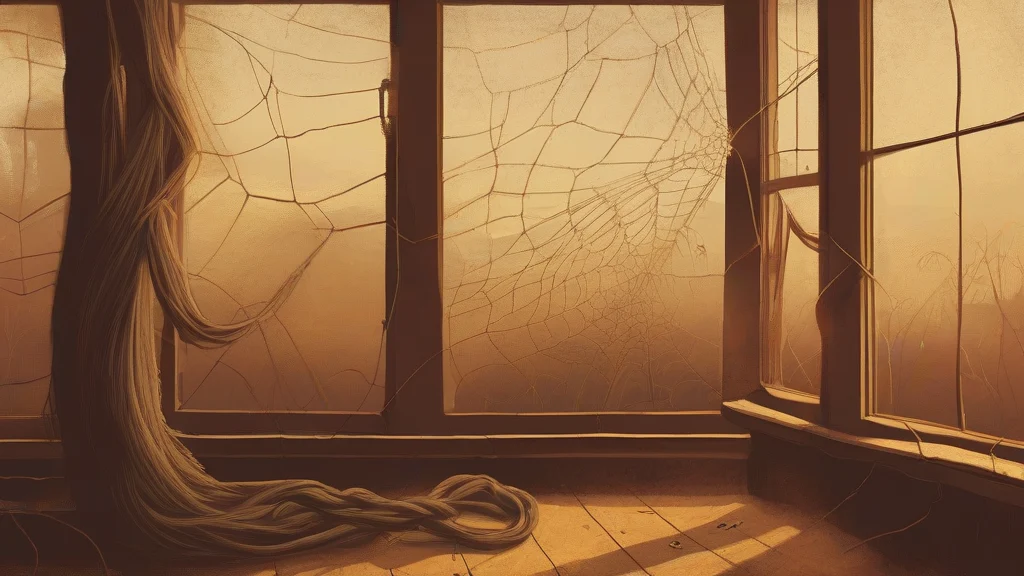
Covered or filled with cobwebs.
"The cobwebbed beams of the old barn caught the afternoon light."
(Figurative) Outdated, neglected, or stale, as if unused for a long time.
"She swept the cobwebbed assumptions out of her argument and started again."
Usually found in expressions about clearing or refreshing the mind.
A single cobweb can be spun from silk finer than a human hair — which is why one dusty strand can make an entire room feel centuries old.
Reviewed by Deb Chak, Editor. AI-assisted content curated by RJS Tech Solutions LLP.
Etymology of cobwebbed
"Cobwebbed" derives straightforwardly from the Middle English noun "cobbe" (meaning a spider, related to the archaic word "attercop") combined with "web," giving "cobweb," plus the adjectival suffix "-ed." The compound noun "cobweb" has existed since the Middle English period, and the derived adjective arose later through ordinary English word-formation rather than being borrowed from another language. It therefore shares its roots with native Germanic vocabulary such as "web" and "weave."
Related word forms
How cobwebbed is actually used
Most often used attributively before a noun ("a cobwebbed ceiling"). The figurative sense — describing ideas, institutions, or minds as outdated or sluggish — usually appears in phrases like "clear away the cobwebs" and carries a mildly negative connotation of neglect or stagnation.
Easily confused with cobwebbed
"Cobweb" is the noun for a spider's web, while "cobwebbed" is the adjective describing something covered with such webs.