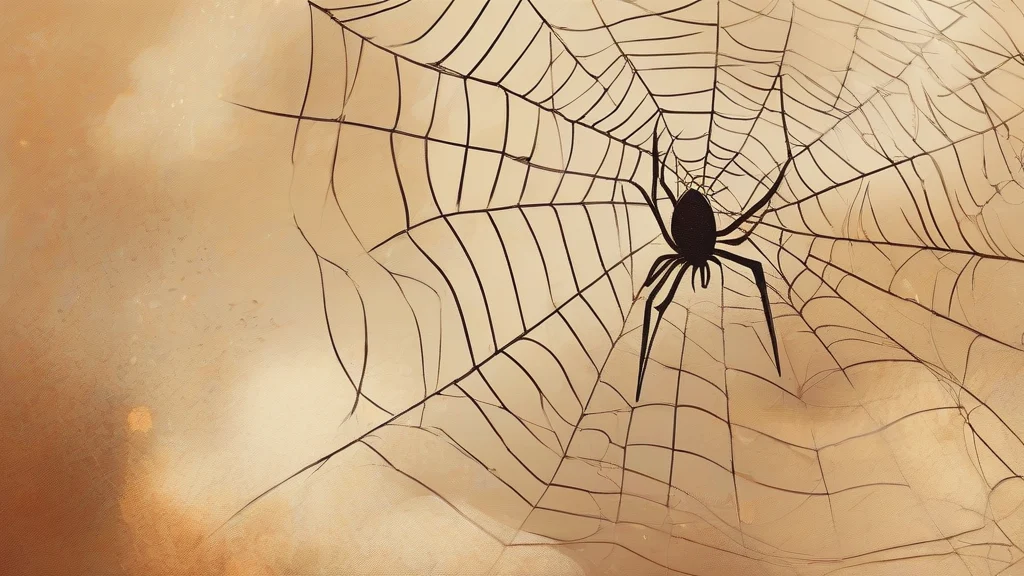
What does cobwebby mean?
Cobwebby is an adjective describing something covered with cobwebs or resembling them in texture. Its most common sense is literal: an unused attic, cellar, or neglected corner of a building may be called cobwebby when dusty silk strands hang across it, a detail that typically signals neglect or long abandonment. A second, figurative sense applies to fabrics, veils, or other materials that are so thin, gauzy, and translucent that they evoke a spider's web — a cobwebby scarf, for instance, would be extremely lightweight and sheer. The word derives from 'cobweb', whose first element 'cob' is an old English term for a spider itself, making the compound essentially a doubled reference to spiders' silk. Cobwebby is informal to neutral in register and works well in descriptive writing, whether evoking the atmosphere of an abandoned house or the ethereal lightness of fine cloth.
adjectiveCovered with, or resembling, cobwebs; thin, gauzy, or filmy in texture like a spider's web.
- Literally covered with or full of cobwebs.
- Resembling cobwebs in texture — thin, gauzy, delicate, or filmy.
"The attic was dim and cobwebby, its rafters hung with dusty filaments."
"She swept the cobwebby corners of the porch before hanging the lanterns."
"The fabric had a cobwebby delicacy, so sheer it seemed woven from air."
The 'cob' in 'cobweb' is actually an ancient English word for a spider itself — so a cobwebby room is literally one full of spider-webs.
Reviewed by Deb Chak, Editor. AI-assisted content curated by RJS Tech Solutions LLP.
Etymology of cobwebby
Cobwebby is formed by adding the adjective suffix '-y' to 'cobweb', a compound of Old English origin. The element 'cob' was a Middle English word meaning 'spider' (related to the Old English 'ātorcoppe'), while 'web' comes from Old English 'webb', meaning 'that which is woven', related to the verb 'weave'. The compound 'cobweb' has been in use since the Middle English period, and the derivative adjective cobwebby developed later as a natural English formation.
Related word forms
How cobwebby is actually used
Informal to neutral register. The literal sense (covered in actual cobwebs) often carries connotations of neglect or long disuse, while the figurative sense (thin and gauzy) is more neutral or even positive, suggesting delicacy or lightness.
Easily confused with cobwebby
A cobblestone is a rounded paving stone used on streets, while cobwebby describes something covered with or resembling spiderwebs.