
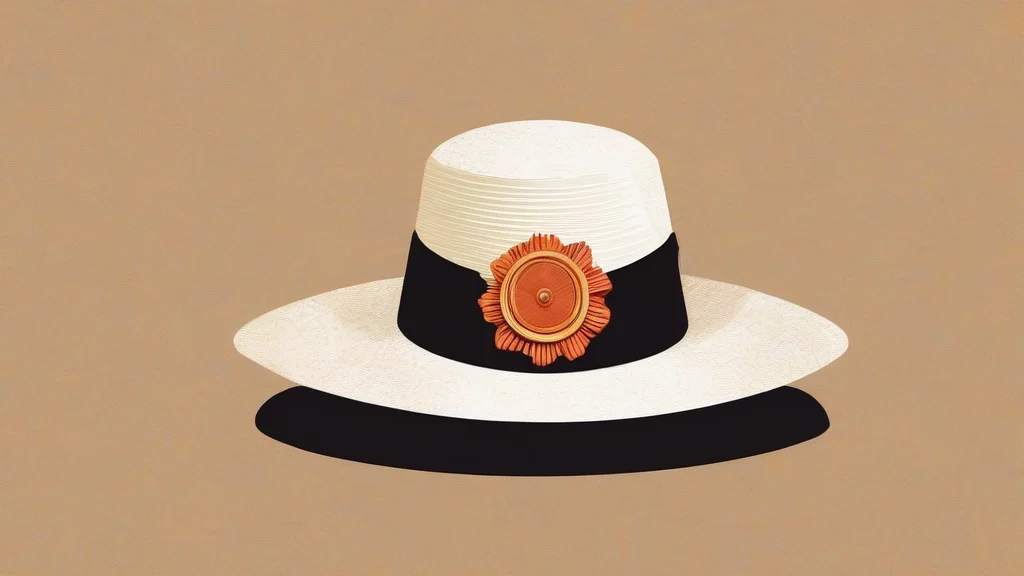
What does cockade mean?
A cockade is a rosette or gathered knot of ribbons worn on a hat or cap as a visible emblem of political loyalty, military rank, or national allegiance. The word is most closely associated with European history, particularly the French Revolution, when the red, white, and blue tricolour cockade became a powerful symbol of republican commitment — so much so that failing to wear one could invite suspicion or worse. Cockades have also long featured in the uniforms of soldiers and officials across many countries, where different colours and patterns identified regiments or causes. Today the word appears chiefly in historical writing, museum contexts, and ceremonial dress, giving it a distinctly formal and somewhat archaic flavour. For readers interested in how clothing can carry political meaning, 'cockade' offers a compact, vivid example of an accessory transformed into a statement of identity and conviction.
nounA cockade is a rosette or knot of ribbons worn on a hat or lapel as a badge of office, allegiance, or political affiliation, especially in the context of military or revolutionary movements.
- A rosette or ribbon knot worn on a hat as a sign of allegiance, rank, or political affiliation.
"The old soldier's uniform still bore the tricolour cockade of the revolution."
"Every officer at the parade wore a scarlet cockade pinned to his bicorne."
"Supporters of the new republic were expected to display the national cockade on their hats."
Standard English plural; used when referring to multiple badges, often across different wearers, regiments, or colours.
"The museum's collection includes cockades from several nineteenth-century European armies."
During the French Revolution, wearing the tricolour cockade wasn't just fashion — it could be a matter of life and death.
Reviewed by Deb Chak, Editor. AI-assisted content curated by RJS Tech Solutions LLP.
Etymology of cockade
The word 'cockade' entered English in the mid-17th century, borrowed from French 'cocarde'. The French term likely derives from 'coquet', related to 'coq' (cock), suggesting a tuft or plume resembling a cock's crest — a nod to the showy, upright quality of such ornaments. The word spread through English alongside the military and political fashions of continental Europe, gaining particular prominence during the revolutionary period of the late 18th century.
How cockade is actually used
The word carries strong historical and ceremonial connotations, appearing most often in discussions of European military dress and revolutionary history. In modern usage it is rare outside historical, reenactment, or formal ceremonial contexts.
Easily confused with cockade
A blockade is the act of sealing off a place to prevent entry or exit, whereas a cockade is an ornamental ribbon badge worn on clothing.
A cocktail is a mixed alcoholic drink, unrelated in meaning to a cockade, though the words share a superficial visual similarity.