What does cockbird mean?
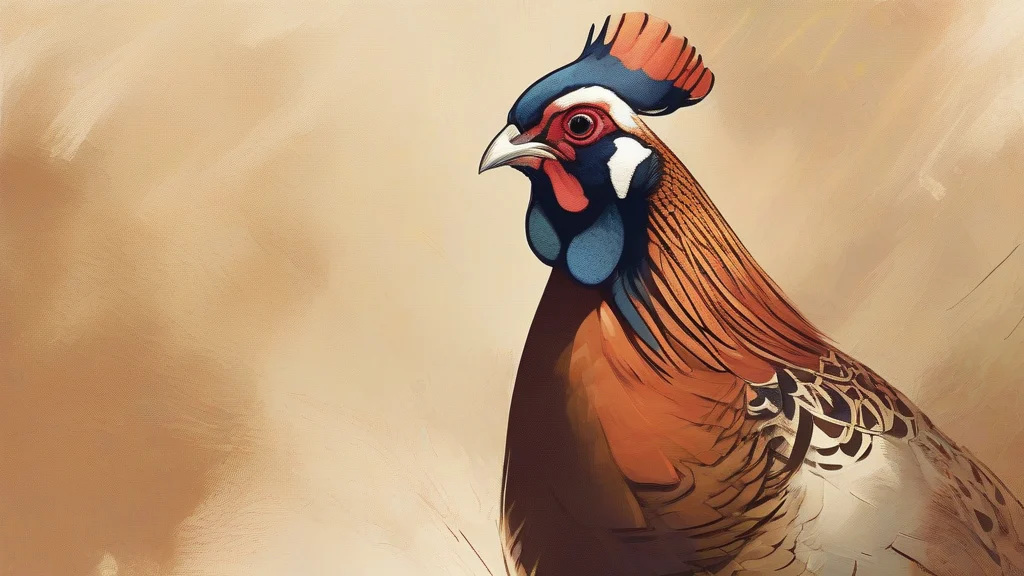
A cockbird is simply a male bird — most often a male pheasant or similar game bird — used to distinguish it from the female, or "hen." The term belongs largely to the specialized vocabulary of hunting, shooting, falconry, and ornithology, and is far more common in British English than American English, where speakers are more likely to say simply "male bird" or "cock." What makes the word useful is that in many species, especially pheasants, the sexes look dramatically different: the cockbird wears iridescent greens, reds, and blues with long sweeping tail feathers, while the hen is camouflaged in mottled brown. Gamekeepers and shooters therefore rely on the term when assessing a covey or planning a season's bag. Though somewhat old-fashioned in tone, "cockbird" remains current in field-sports circles and adds precision wherever male and female birds must be told apart.
nounA male bird, especially a male pheasant or other game bird. The term distinguishes the male from the female (the hen bird) in species where the two differ markedly in appearance.
- A male bird, especially of a game-bird species such as the pheasant.
- (By extension, chiefly in hunting and falconry contexts) an adult male hawk or other bird distinguished from the female.
"The cockbird's brilliant plumage flashed through the undergrowth as the beaters moved in."
"A magnificent cockbird pheasant strutted along the hedgerow, his long tail trailing behind him."
"Falconers can often tell a tiercel from the larger female at a glance, but in many species it is the cockbird's colouring that gives him away."
Regular plural; used when referring to multiple male birds, e.g. in counts of game bags.
"The keepers counted a dozen cockbirds over the winter feed."
In a pheasant shoot, the prize birds are always the cockbirds — their jewel-toned plumage makes them unmistakable next to the drab brown hens.
Reviewed by Deb Chak, Editor. AI-assisted content curated by RJS Tech Solutions LLP.
Etymology of cockbird
The word combines "cock," an Old English term (cocc) for a male bird, with "bird." "Cock" itself has deep Germanic roots, appearing across Old English, Old Norse, and related Germanic languages as the standard word for a male fowl, and it later extended generically to males of other bird species. Compounds pairing "cock" with another noun are numerous and ancient — weathercock, haycock, cockpit — and "cockbird" arose on this pattern as a hunting and country term for a male game bird, particularly the pheasant.
How cockbird is actually used
"Cockbird" is a somewhat traditional or specialist term, heard mainly among hunters, gamekeepers, falconers, and ornithologists rather than in everyday speech. It carries no strong connotation beyond its technical use, though it can sound old-fashioned to general audiences. It is most strongly associated with British field sports vocabulary.
Easily confused with cockbird
A haycock is a small conical heap of hay in a field, whereas a cockbird is a male bird; they share only the element 'cock' meaning a compact male or mound form.