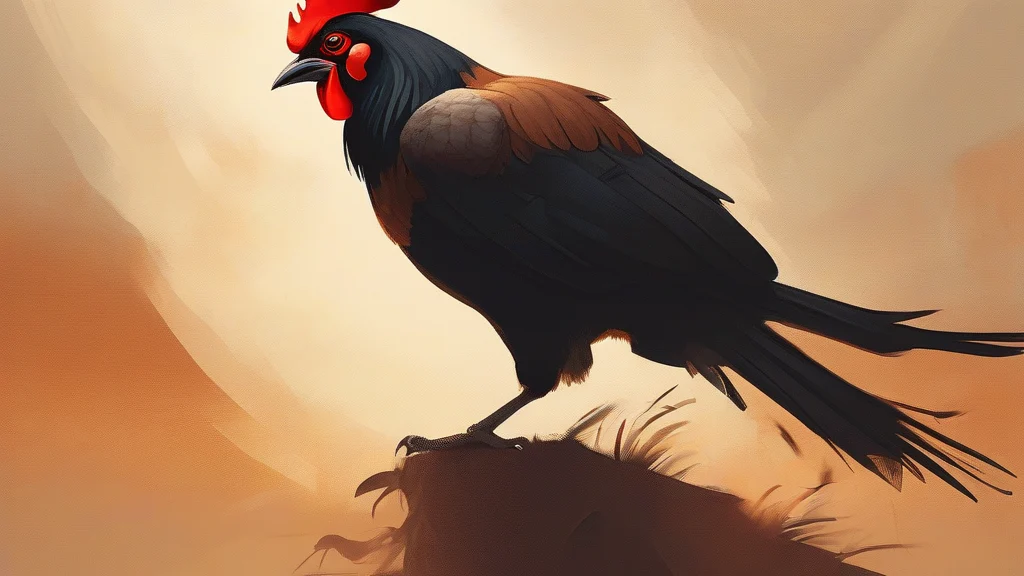
What does cockcrow mean?
Cockcrow is a noun meaning dawn or daybreak — literally, the moment when roosters begin to crow. The word combines 'cock' (a male chicken) and 'crow' (the loud call the bird makes), reflecting a time when roosters served as natural alarm clocks for farming communities. It carries a distinctly rustic, literary flavor today, appearing more often in poetry, historical fiction, and biblical or pastoral writing than in casual conversation. Typical phrases include 'at cockcrow,' meaning at the very break of day, often implying early rising, hard work, or a fresh start. Its connotations are wholesome and evocative, suggesting simplicity, diligence, and the rhythms of rural life. For writers seeking an atmospheric alternative to 'dawn' or 'daybreak,' cockcrow offers charm and precision alike.
nounThe time of day when roosters crow, i.e., dawn or daybreak.
- Dawn or daybreak, the time at which a rooster typically crows.
"The travelers rose at cockcrow to begin their long journey."
"They broke camp at cockcrow and were on the trail before sunrise."
"In the old village, church bells rang at cockcrow to call laborers to the fields."
Rarely pluralized; the word almost always appears in its singular form, as it refers to a recurring daily event.
"The novel opens with descriptions of successive cockcrows across the countryside."
Before alarm clocks existed, roosters were humanity's most reliable timekeepers — and 'cockcrow' was the word for their morning shift.
Reviewed by Deb Chak, Editor. AI-assisted content curated by RJS Tech Solutions LLP.
Etymology of cockcrow
Cockcrow is a compound of Middle English elements: 'cock,' meaning a male chicken, and 'crow,' referring both to the bird's call and, by extension, the act of crowing. The compound has been used since at least the late medieval period to denote the hour of dawn, when roosters reliably announce first light. It belongs to a small family of time-telling expressions rooted in animal behavior rather than astronomical observation.
How cockcrow is actually used
Somewhat literary or old-fashioned in modern usage; more common in historical, rural, or poetic contexts than everyday speech.