
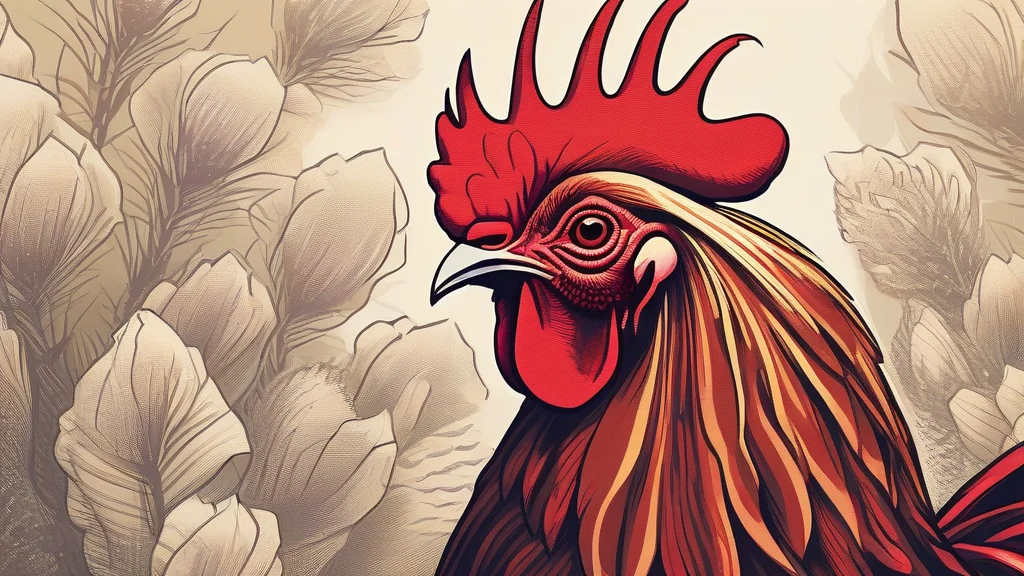
What does cockscomb mean?
Cockscomb has two everyday meanings. Literally, it is the bright red, fleshy crest on the head of a rooster, one of the bird's most distinctive features. By extension, it names a striking garden annual, Celosia cristata, whose tightly ruffled flower heads uncannily resemble that crest, making it a favourite of summer bedding schemes in shades of crimson, pink, orange, and gold. A third, older sense uses the word (often spelled coxcomb) to describe a vain, self-satisfied man — a fop who preens like a strutting cockerel — a usage common in Renaissance and Restoration literature but rare today except in historical or literary discussion. The word is transparently formed from "cock" plus "comb," so its imagery is easy to grasp even on first encounter. Whether describing poultry anatomy, a flamboyant flower, or a pompous character, cockscomb always carries the same underlying picture of something showy, crested, and attention-seeking.
The fleshy red crest on the head of a rooster.
"A healthy cockerel displays a vivid, upright cockscomb."
An annual ornamental plant, Celosia cristata, bearing a dense, velvety, crest-shaped flower head.
"Cockscombs thrive in hot weather and hold their colour well as cut flowers."
A vain, conceited, or foolishly ostentatious man; a fop (more commonly spelled coxcomb).
"He dismissed his rival as a mere coxcomb, all feathers and no substance."
This sense is chiefly literary or historical in modern usage.
Regular plural; used when referring to multiple birds' crests, several plants, or (historically) several fops.
"The market stall was crowded with pots of blooming cockscombs."
The ruffled blooms of the cockscomb plant look so much like a rooster's crest that botanists named it after the bird — and for centuries, calling a man a 'coxcomb' was a cutting way to say he was all show.
Reviewed by Deb Chak, Editor. AI-assisted content curated by RJS Tech Solutions LLP.
Etymology of cockscomb
Cockscomb is straightforwardly compounded from Middle English "cok" (cock, rooster), from Old English "coc", and "comb" (crest), from Old English "camb". The compound was originally applied to the rooster's fleshy crest, and from there extended metaphorically to anything resembling it — most notably the crested flower Celosia cristata and, by the sixteenth century onward, a vain man who preened like a cockerel. The spelling "coxcomb" arose as a phonetic variant of the same word and came to dominate the figurative sense.
How cockscomb is actually used
The literal senses (rooster's crest; Celosia cristata) are standard in modern English. The figurative sense meaning a vain or foolish man is now largely historical or literary and is more often spelled "coxcomb." In horticultural contexts, the plant may simply be called Celosia.
Easily confused with cockscomb
"Coxcomb" (a variant spelling) refers specifically to a vain, foolish, self-important man — an archaic term for a fop — whereas "cockscomb" most commonly denotes the rooster's crest or the crested garden plant; both spellings can carry either meaning, but "coxcomb" strongly connotes the figurative sense.