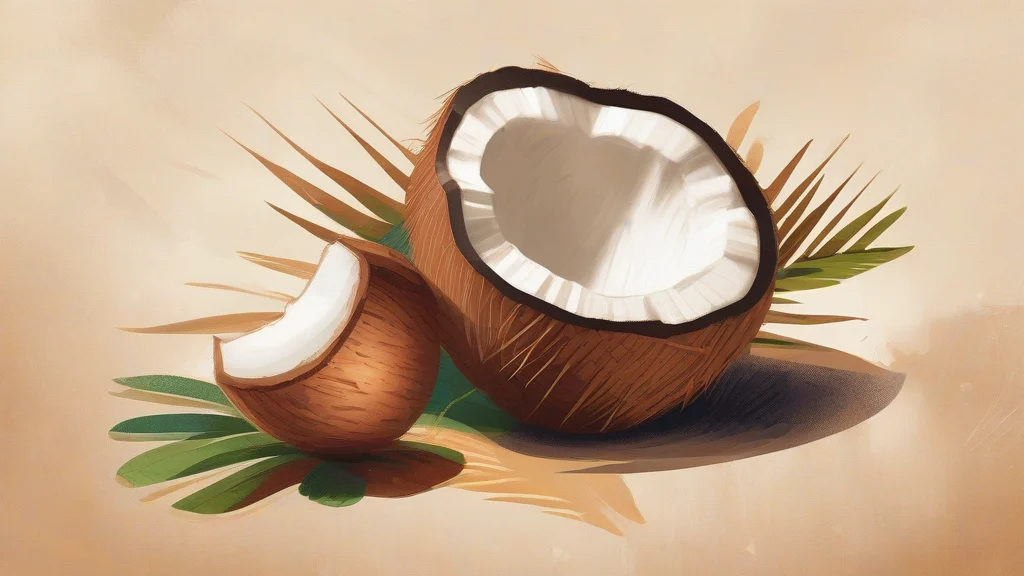
What does cocoanut mean?
Cocoanut is an older English spelling of coconut, referring to the large, woody fruit of the coconut palm (Cocos nucifera) — a one-seeded drupe with a fibrous husk, hard shell, and interior of sweet liquid and firm white flesh. The word was widely used through the nineteenth and early twentieth centuries, appearing frequently in cookbooks, advertisements, and literature of the era, before the simpler spelling "coconut" became the established standard. Today, cocoanut is encountered mainly in historical sources, vintage recipes such as old-fashioned cocoanut cakes and pies, and period fiction. Writers occasionally revive it for its antique charm, much like "connexion" or "shew," but it is regarded as nonstandard in contemporary usage. The spelling arose from folk association with "cocoa" rather than any botanical distinction, and it denotes exactly the same fruit, foodstuff, and palm tree as its modern counterpart.
nounAn older spelling variant of coconut, denoting the large, hard-shelled fruit of the coconut palm (Cocos nucifera), or the edible white flesh and liquid contained within it.
- The large, hard-shelled drupe of the coconut palm, containing edible white flesh and sweet liquid (now standardly spelled coconut).
- The edible white flesh of this fruit, especially when dried or grated for cooking.
"The old recipe called for a freshly grated cocoanut."
"She cracked open the cocoanut on the kitchen step, as her grandmother had done."
"The cake was frosted with desiccated cocoanut in the fashion of the 1920s."
Pluralizes regularly with -s; the plural appears chiefly in older texts.
"Baskets of cocoanuts were stacked along the dock."
For decades, dictionaries spelled it 'cocoanut' — until 'coconut' won out, leaving this quirky spelling behind in vintage recipes and Victorian novels.
Reviewed by Deb Chak, Editor. AI-assisted content curated by RJS Tech Solutions LLP.
Etymology of cocoanut
The word ultimately derives from Portuguese coco, meaning "grinning face" or "goblin," so named — according to tradition — because the three dark spots at the base of the shell were thought to resemble a face. The term entered European languages via Portuguese and Spanish sailors in the sixteenth century, and English adopted it in the seventeenth century, combining it with native "nut" to form "cocoanut" (or "coconut"). The spelling with the medial "a" reflects a popular association with "cocoa," which derives from an entirely different source (the cacao plant, via Spanish cacauatl from Nahuatl); the two words are unrelated despite their visual similarity. By the twentieth century, "coconut" had prevailed as the standard form.
How cocoanut is actually used
This spelling is now considered archaic or nonstandard; modern writing uses "coconut." It survives mainly in historical texts, older cookbooks, and period literature. It carries a quaint, old-fashioned flavor when used deliberately today.
Easily confused with cocoanut
Cocoa is a powder and drink made from cacao beans, while cocoanut (or coconut) is the fruit of the coconut palm; the similar spellings stem partly from shared Portuguese origins.