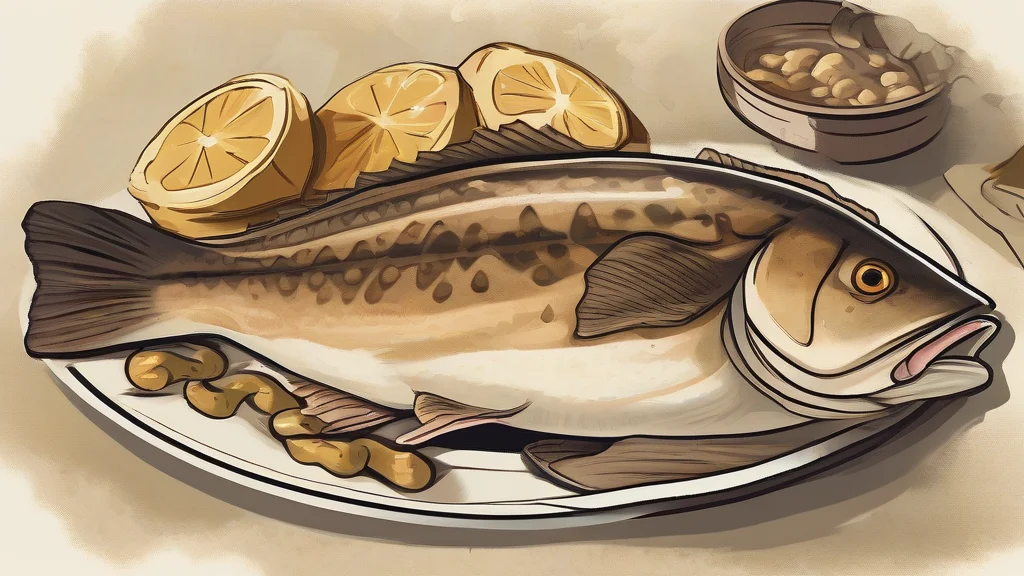
What does codfish mean?
Codfish is a noun referring to a cod — a cold-water marine fish of the North Atlantic and North Pacific — or to its firm white flesh used as food. The term is especially common in culinary and commercial contexts, since cod has long been prized as much for how well it preserves as for how it tastes: salted and dried codfish became a staple of European, Caribbean, and West African diets for centuries. In everyday speech people often simply say "cod," reserving "codfish" for recipes, markets, and traditional dishes such as codfish cakes, codfish balls, and Portuguese bacalhau. The word carries a wholesome, old-fashioned connotation, evoking fishing villages, chowder pots, and transatlantic trade routes. Though overfishing has made some cod stocks a conservation concern, codfish remains a familiar and respected name on menus and in pantries worldwide.
nounA cod, especially one caught or prepared as food; the flesh of the cod used as food.
- A cod (fish of genus Gadus), especially as caught for food
- The flesh of the cod eaten as food
"The chowder was made with chunks of fresh codfish and potatoes."
"Fishermen hauled barrels of salted codfish aboard before the long voyage home."
"Her grandmother's bacalao recipe called for soaking the codfish overnight to draw out the salt."
"Codfishes" is the regular plural; "codfish" is also used collectively, especially when referring to the foodstuff rather than individual fish.
"Several codfishes were displayed on ice at the fishmonger's stall."
Salted codfish once crossed the Atlantic so often that it helped finance empires — and in Portugal it's still affectionately called 'fiel amigo', the faithful friend.
Reviewed by Deb Chak, Editor. AI-assisted content curated by RJS Tech Solutions LLP.
Etymology of codfish
Codfish is an English compound formed from "cod," the name of the fish, plus "fish." The origin of "cod" itself is uncertain, though it appears in English by the late Middle Ages; some scholars have suggested links to Old English words meaning bag or scrotum, referencing the fish's shape, but this remains speculative. The compound "codfish" is attested from around the early modern period, coinciding with the growth of the Atlantic cod fisheries. Related names in other Germanic languages, such as Dutch "kabeljauw" and German "Kabeljau," ultimately derive from Latin "gadulus," a diminutive related to "gadus," the classical name for cod — the source of the scientific genus Gadus.
How codfish is actually used
"Codfish" tends to appear in culinary and commercial contexts, particularly where the fish is dried, salted, or otherwise preserved; plain "cod" is more common in casual everyday speech. The term is well established on both sides of the Atlantic.
Easily confused with codfish
"Cod" refers to the fish itself or its flesh in general use, while "codfish" is the more formal or culinary term for the fish or its meat, especially when dried or salted.