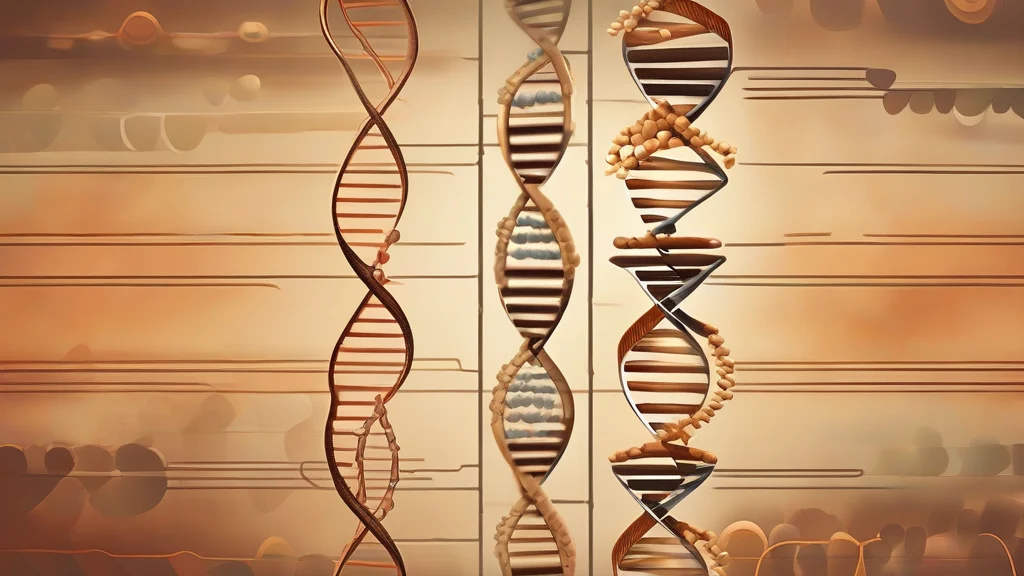
What does codon mean?
A codon is a sequence of three consecutive nucleotides within a DNA or messenger RNA molecule that functions as a unit of the genetic code. During protein synthesis, each codon is read by the cell's translation machinery — the ribosome — and matched to a specific amino acid, or to a signal that starts or stops the building of a protein chain. Because there are 64 possible three-letter combinations of the four nucleotide bases but only 20 standard amino acids, the code is described as degenerate: most amino acids are specified by more than one codon. Special codons act as punctuation, with one marking the beginning of translation and three marking its end. The term belongs firmly to molecular biology and genetics, appearing in research papers, textbooks, and biotechnology contexts rather than casual conversation. Understanding codons is fundamental to fields ranging from medicine to evolutionary biology, since changes in even a single codon can alter a protein's structure and function.
nounA sequence of three nucleotides in DNA or messenger RNA that specifies a particular amino acid during protein synthesis, or serves as a start or stop signal.
- A triplet of nucleotides in DNA or mRNA that codes for a specific amino acid or a translation signal (start/stop) during protein synthesis.
"Each codon in the mRNA strand tells the ribosome which amino acid to add next to the growing protein chain."
"The mutation changed a single codon, substituting one amino acid for another in the resulting protein."
"Because the genetic code is degenerate, several different codons can specify the same amino acid."
Standard English plural; used freely when referring to multiple coding triplets within a gene or genome.
"The gene contains over three hundred codons between its start and stop signals."
There are 64 possible codons but only 20 amino acids — meaning the genetic code is redundant, and some codons are simply synonyms of each other.
Reviewed by Deb Chak, Editor. AI-assisted content curated by RJS Tech Solutions LLP.
Etymology of codon
The word 'codon' was coined in the early 1960s by the scientist Sydney Brenner, drawing on the Greek root 'kōdein' meaning 'to encode' or 'to put into code,' combined with the suffix '-on' commonly used for units in physics and chemistry. It was created specifically to name the triplet unit of the newly deciphered genetic code, following the work of Watson, Crick, Nirenberg, and others in establishing how DNA information is translated into proteins. The term shares its underlying root with words like 'code' and 'encode,' reflecting the idea that biological information is written in a symbolic system much like human languages.
How codon is actually used
A technical term used almost exclusively in molecular biology and genetics; it does not appear in general everyday speech. The word is countable and takes standard plural forms.