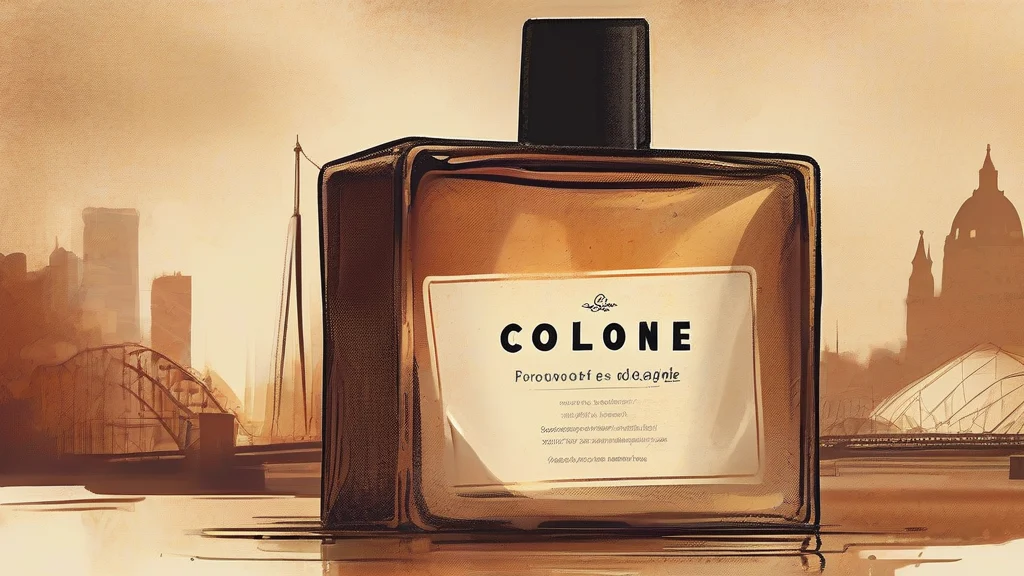
What does cologne mean?
Cologne is a scented liquid — typically a blend of fragrant oils, alcohol, and water — applied to the skin to impart a pleasant smell. Compared with perfume, cologne generally carries a lower concentration of aromatic compounds, giving it a lighter, fresher character that fades sooner. The word derives from the French name for the German city of Köln, where an Italian perfumer created the original citrus-scented 'eau de Cologne' in the early eighteenth century; the fragrance became so famous that its place of origin turned into a generic term for any similar scent. In everyday use, 'cologne' most often refers to a man's fragrance — 'he was wearing too much cologne' — while 'perfume' tends to be associated with women's or richer scents, though the line is informal rather than strict. Common collocations include splash on, spritz of, and bottle of cologne. Its blend of history and daily utility makes it one of the few English words named after a city yet applied to something found in nearly every bathroom cabinet.
nounA scented liquid, typically lighter than perfume, made of alcohol and fragrant oils and worn on the skin; also, short for eau de cologne.
- A light scented liquid worn on the skin as a fragrance.
- (Eau de Cologne) The specific original citrus-based fragrance from Cologne, Germany.
"He dabbed a little cologne behind his ears before the interview."
"She caught a trace of his cologne as he leaned over to sign the book."
"A classic eau de cologne opens with bright notes of lemon, bergamot, and neroli."
Used mainly when referring to different varieties or brands of the fragrance.
"The boutique stocks dozens of niche colognes alongside its classic perfumes."
The word 'cologne' is literally just the German city of Köln wearing a disguise — English speakers borrowed it from the French name for the city where the fragrance was first made in 1709.
Reviewed by Deb Chak, Editor. AI-assisted content curated by RJS Tech Solutions LLP.
Etymology of cologne
The word comes from the French 'eau de Cologne', literally 'water from Cologne', referring to the German city of Köln on the Rhine. In the early eighteenth century an Italian barber-perfumer, Johann Maria Farina, living in Cologne created a citrus-based scented water that became celebrated across Europe. English shortened the phrase to 'cologne', which by the nineteenth century had become a general noun for any light scented spirit-based liquid. The city name itself traces back through Latin 'Colonia' to Latin 'colonus', meaning 'farmer' or 'settler'.
How cologne is actually used
'Cologne' is informal-to-neutral register and often implies a men's fragrance, while 'perfume' more often suggests women's or heavier scents, though this distinction is loose and largely marketing-driven. It is commonly used attributively ('cologne bottle'). The word is a shortening of 'eau de Cologne'.
Easily confused with cologne
Capitalized 'Cologne' refers to the German city (Köln) on the Rhine; lowercase 'cologne' refers to a type of light fragrance.
Perfume contains a much higher concentration of aromatic oils than cologne, making it stronger and longer-lasting.