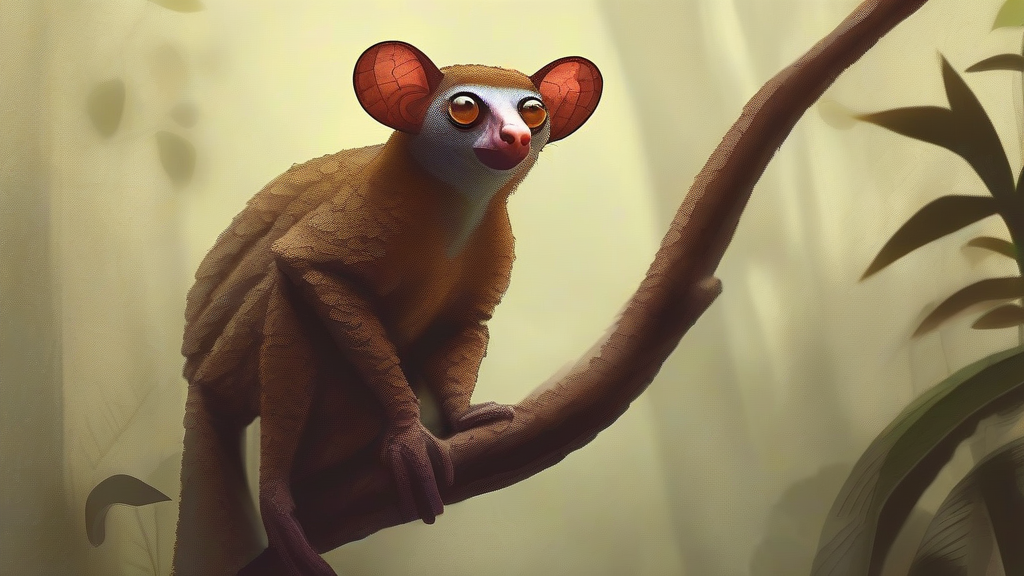
What does colugo mean?
A colugo is an arboreal mammal found in the forests of Southeast Asia, comprising two living species: the Sunda colugo and the Philippine colugo. Often nicknamed the "flying lemur," the colugo is neither a true lemur nor capable of powered flight; instead, it glides gracefully between trees using a broad membrane of skin, called a patagium, that extends from its neck along its limbs to the tip of its tail — making it one of the most skilled gliding mammals on Earth. Nocturnal and largely solitary, colugos spend daylight hours clinging to tree trunks and forage at night on leaves, shoots, and fruit. The word appears mainly in zoological, conservation, and natural-history contexts rather than everyday speech. Colugos are of particular scientific interest because their evolutionary relationships remain debated, with some studies suggesting they are among the closest living relatives of primates.
nounA colugo is an arboreal mammal of Southeast Asia belonging to the order Dermoptera; it glides between trees using a large membrane of skin that stretches from its neck to the tips of its limbs and tail. Colugos are also known as flying lemurs, though they are not true lemurs and cannot actually fly.
- An arboreal gliding mammal of the order Dermoptera, native to the forests of Southeast Asia, also called a flying lemur.
"The Sunda colugo launched itself from the trunk and glided silently to a tree thirty metres away."
"Researchers fitted the Philippine colugo with a tracker to study its nocturnal gliding patterns."
"Because deforestation fragments their habitat, colugos are increasingly forced into smaller pockets of forest."
The regular plural "colugos" is standard; the spelling "colugoes" is rare and nonstandard.
"Colugos are rarely seen by day, resting motionless against tree trunks until dusk."
The colugo can glide the length of a football field while losing barely any height — yet its closest living relatives may be you and other primates.
Reviewed by Deb Chak, Editor. AI-assisted content curated by RJS Tech Solutions LLP.
Etymology of colugo
The word "colugo" entered English through natural-history writing about Southeast Asian fauna, but its ultimate origin remains uncertain. It is generally believed to derive from an indigenous language of the region where the animal occurs, such as Malay or a related local source, though etymologists have not established a definitive root. The term has been in use since at least the early nineteenth century alongside the older descriptive name "flying lemur."
How colugo is actually used
"Colugo" is a scientific and naturalist term used in zoology and wildlife writing; the informal synonym "flying lemur" is more familiar to general readers, though technically misleading since colugos are neither lemurs nor capable of powered flight. The plural is "colugos."
Easily confused with colugo
Despite the nickname 'flying lemur,' colugos are not primates and are only distantly related to true lemurs of Madagascar.