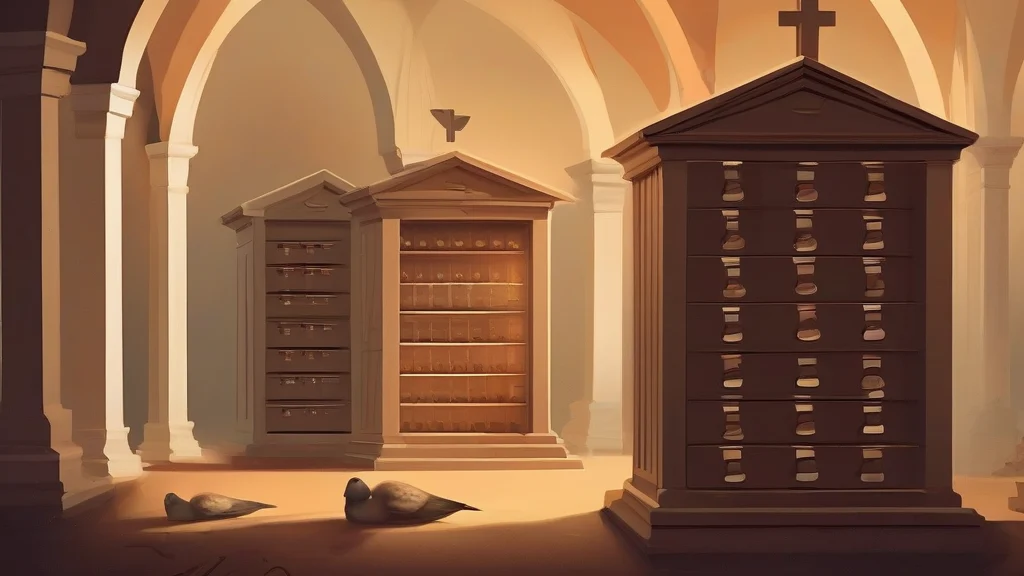
What does columbary mean?
A columbary is a structure built to house domestic pigeons or doves — essentially what is more commonly called a dovecote or pigeon loft. The word derives from Latin columba, meaning dove or pigeon, the same root behind columbarium and columbine. Historically, keeping pigeons was a privilege tied to landownership in medieval Europe, and purpose-built columbaries — often round stone towers fitted with rows of nesting niches — were familiar features of manors, farms, and monasteries, valued both as a source of meat, eggs, and feathers and as symbols of status. Today the term survives mainly in architectural, historical, and literary contexts, describing either surviving historic structures or modern enclosures for ornamental doves. Because it is uncommon in everyday speech, columbary lends a distinctly learned or antiquarian flavor to writing, evoking pastoral tradition and the long shared history of humans and pigeons.
nounA structure, such as a tower or dovecote, in which domestic pigeons or doves are kept and breed; a pigeon house.
- A building or shelter, especially a dovecote or pigeon house, where domestic pigeons or doves are housed and allowed to breed.
"The old farm still had its columbary standing beside the barn, though the pigeons had long since gone."
"The medieval manor's columbary was a status symbol, since the right to keep pigeons was once restricted to landowners."
"Restorers carefully repaired the crumbling stone columbary so the estate's white doves would have somewhere to roost."
The standard plural adds '-ies'; the spelling 'colombary' also occurs historically.
"Several ruined colombaries dot the countryside around the old abbey."
The word 'columbary' literally means a 'dove-place', built from the same Latin root that gives us the name Columba — and even 'columbarium', the wall of niches where urns are kept.
Reviewed by Deb Chak, Editor. AI-assisted content curated by RJS Tech Solutions LLP.
Etymology of columbary
Columbary comes from Latin columbarius or columbarium, derived from columba, the Latin word for dove or pigeon. It entered English in the early modern period as a term for a dovecote or pigeon house. Its closest relatives are columbarium, which now chiefly denotes a vault for funeral urns but originally meant a dovecote, and columbine, from the same bird-root applied to the flower.
How columbary is actually used
Columbary is a rare, largely literary or historical term; in ordinary usage people say 'dovecote' or 'pigeon loft'. It carries an archaic, pastoral connotation and appears mostly in writing about architecture, estates, and rural history.
Easily confused with columbary
A columbarium is a vault with niches for storing funeral urns, while a columbary is a shelter for keeping live pigeons or doves — both derive from Latin columba, 'dove'.