What does comal mean?
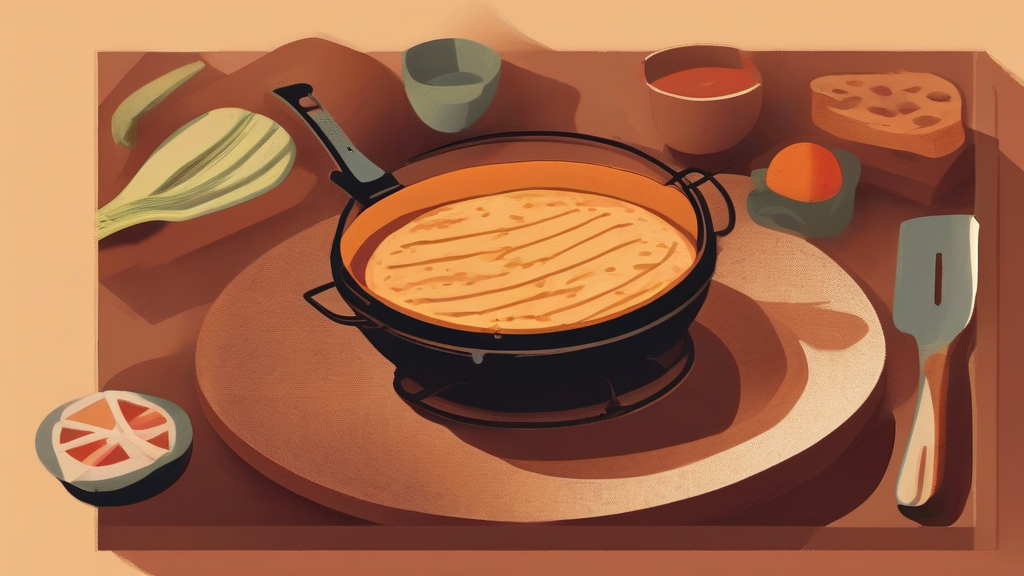
A comal is a flat, round griddle used across Mexico and Central America, and increasingly familiar in kitchens throughout the United States. Traditionally made of clay or carbon steel, and today often of cast iron, it sits over a flame or burner and serves as the workhorse of tortilla cookery: corn and flour tortillas are heated on its surface until they soften, blister, and develop toasted spots. A comal also toasts dried chiles, spices, seeds, and garlic, and can char tomatoes and onions for salsas. Unlike a skillet, it usually has no sides, allowing easy flipping and even, dry heat. The word comes from Nahuatl, the Aztec language, entering English through Spanish, so the comal represents a cooking tradition that predates European contact. For cooks exploring Mexican cuisine, it is considered an essential, inexpensive tool.
nounA flat, round griddle, traditionally of cast iron or clay, used in Mexican and Central American cooking to heat tortillas, toast spices, and char vegetables.
- A flat griddle, typically cast iron or clay, used in Mexican and Central American cooking to warm tortillas and toast ingredients.
"She warmed the tortillas on the comal until they blistered and puffed."
"Warm the tortillas on a dry comal for about thirty seconds per side."
"Her grandmother's clay comal had been seasoned by decades of daily use."
Standard regular plural; sometimes left unmarked when referring to the utensil generically.
"The restaurant kitchen kept several cast-iron comals warming on the line."
The humble comal has been flattening tortillas since long before Columbus sailed — it's one of the few kitchen tools with roots in Aztec cookware still found on modern stovetops.
Reviewed by Deb Chak, Editor. AI-assisted content curated by RJS Tech Solutions LLP.
Etymology of comal
The word "comal" entered English from Mexican Spanish, which borrowed it from Nahuatl, the language of the Aztec Empire, in which the griddle was called "comalli." Because tortilla cooking was central to Mesoamerican cuisine long before European contact, the comal itself is an ancient utensil, and its name preserves an indigenous word that survived colonization. It belongs to the small family of Nahuatl loanwords in English culinary vocabulary, alongside words like "tamale" and "atole."
How comal is actually used
Most common in American English, especially in Tex-Mex, Southwestern, and Mexican-American cooking contexts; less familiar to British readers. The word carries an authentic, traditional connotation in food writing.
Easily confused with comal
"Communal" means shared by a community, while a "comal" is a flat griddle used for cooking tortillas.