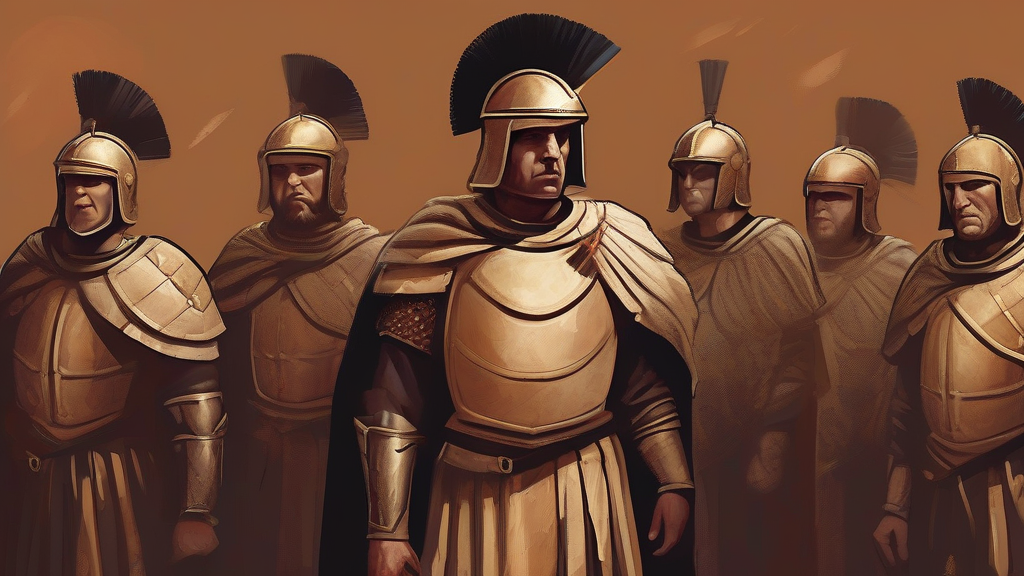
What does comitatus mean?
Comitatus is a Latin word meaning 'company' or 'retinue', best known to historians as the name for the warband of armed retainers who served a Germanic chieftain or medieval lord. Described by the Roman historian Tacitus in his Germania, this institution rested on a personal bond of loyalty: young warriors attached themselves to a leader who provided them with weapons, gifts, and a place at his table, and they were expected to defend him with their lives. The comitatus is often cited as a foundation of feudal relationships between lords and vassals, and its ethos pervades Old English poetry such as Beowulf. Separately, in Roman administrative and later Anglo-American legal usage, comitatus denotes a county or shire, surviving today chiefly in the phrase posse comitatus, the body of citizens a sheriff may summon. The word remains largely scholarly, carrying connotations of sworn fidelity, martial brotherhood, and pre-modern social order.
nounA Latin term denoting a warband or retinue of warriors bound by oath to a chieftain or lord in early Germanic society; in legal and historical usage, also a county or the body of citizens of a county.
- The retinue of armed retainers bound by personal loyalty to a Germanic chieftain or lord, central to early medieval social organization.
- In Roman and later legal usage, a county or shire; also the assembled body or militia of a county (as in Anglo-American legal terminology).
"Anglo-Saxon kings relied on their comitatus, a sworn band of retainers who shared their lord's fortunes in battle."
"Tacitus observed that the strength of Germanic leaders lay in their comitatus, whose warriors competed for the honour of fighting at their lord's side."
"In early American statutes, the posse comitatus was understood as all able-bodied citizens whom the sheriff could summon to keep the peace."
As a Latin fourth-declension noun its plural is comitatūs, identical to the genitive singular, so scholarly prose often leaves it unpluralized; the anglicized form comitatuses is acceptable in general writing.
"Early medieval sources describe several distinct comitatus across the Germanic kingdoms."
In early Germanic law, a warrior who outlived his fallen lord in battle faced lifelong disgrace — the comitatus bond was meant to be unto death.
Reviewed by Deb Chak, Editor. AI-assisted content curated by RJS Tech Solutions LLP.
Etymology of comitatus
Comitatus is classical Latin, formed from comes ('companion, attendant') with the suffix -atus, and literally means 'companionship' or 'the company of attendants'. From comes are also derived the titles count and county, which entered English through Old French from the Late Latin use of comes for imperial officials governing territories. The term was applied by Tacitus and later medieval writers to the Germanic retinue system, and its legal sense of a county passed into English via post-classical Latin usage.
Related word forms
How comitatus is actually used
A scholarly and historical term, encountered mainly in medieval studies, anthropology, and legal history rather than everyday speech. It is usually italicized when treated as an untranslated Latin phrase. In legal contexts it survives chiefly in the fixed expression 'posse comitatus'.
Easily confused with comitatus
A committee is a modern group appointed for a specific task, while a comitatus is a historical band of warriors personally sworn to a chieftain.