What does commandery mean?
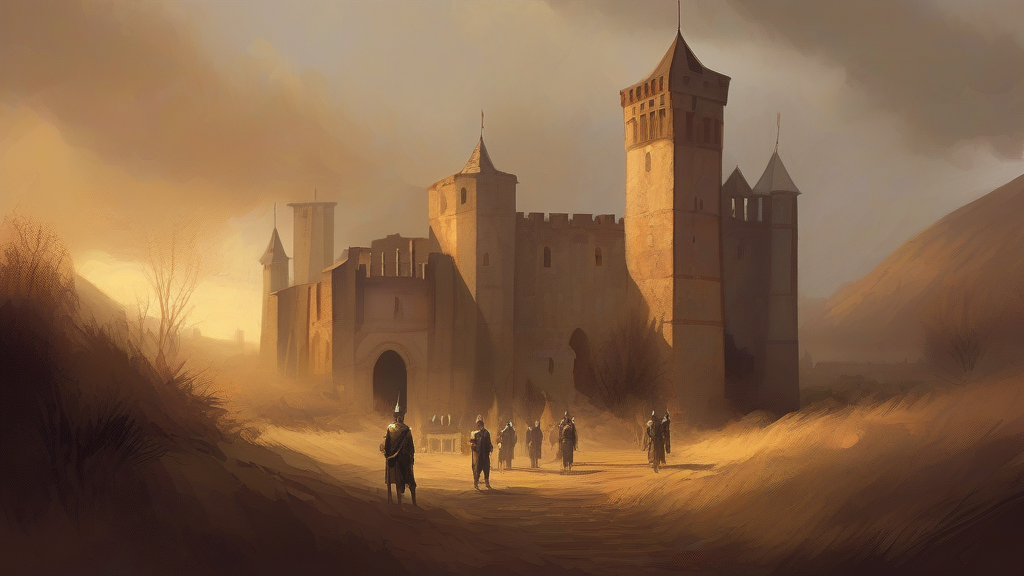
A commandery is an administrative subdivision of a military-religious order, most famously the Knights Templar and the Knights Hospitaller, which flourished during and after the Crusades. Each commandery consisted of an estate or group of estates whose revenues supported the order's activities — hospitals, garrisons, and campaigns in the Holy Land — and it was placed under the authority of a commander or preceptor. The word also refers to the building or complex that served as the headquarters of such a branch, often including a chapel, dormitory, and farm buildings; several survive today as historic sites across Europe. The term carries a distinctly historical and scholarly register, appearing in medieval history, archaeology, and heritage tourism rather than everyday speech. In American Freemasonry, it has an extended life as the name of the top governing body of the York Rite's Knights Templar.
nounA commandery is a branch or local division of a military-religious order such as the Knights Templar or Knights Hospitaller, typically comprising an estate with its revenues administered by a commander. It also denotes the building or headquarters housing such a division.
- An administrative branch or territorial division of a military-religious order such as the Knights Templar or Knights Hospitaller, governed by a commander.
- The building or estate serving as the seat of such a branch.
"The twelfth-century commandery at Slebech once managed vast Hospitaller estates across West Wales."
"Each commandery forwarded a portion of its revenues to support the order's hospital in Jerusalem."
"Visitors can still tour the restored commandery, with its vaulted chapel and tithe barn."
Standard plural; used when referring to multiple branches or buildings of an order.
"The Templars held commanderies throughout France and England before their dissolution."
When the Knights Templar were crushed in the early 1300s, their commanderies — hundreds of fortified estates across Europe — were handed over to their rivals, the Knights Hospitaller.
Reviewed by Deb Chak, Editor. AI-assisted content curated by RJS Tech Solutions LLP.
Etymology of commandery
Commandery derives from the Old French 'commanderie', itself formed from 'commander' (to entrust or commit), which traces back through Late Latin 'commutare'/'commendare' to Latin 'mandare', meaning to commit or entrust. It entered English in the late Middle Ages, when the estates of the crusading orders were commonly described by this term. It thus shares its root with words such as command, commander, and commandment.
How commandery is actually used
The word is largely historical and specialist, appearing mainly in contexts concerning the Crusades, medieval orders, and heritage architecture. In modern Freemasonry, 'commandery' also names the highest body of the York Rite of Knights Templar, a usage familiar chiefly within Masonic circles.
Easily confused with commandery
A commentary is a written explanation or discussion of a text or event, whereas a commandery is an administrative branch of a knightly order.