
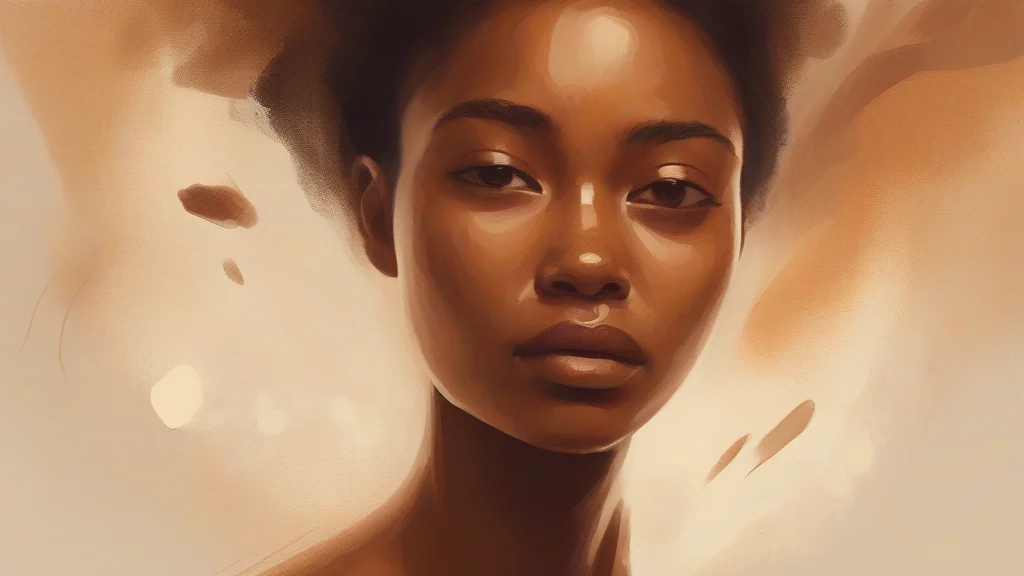
What does complexion mean?
Complexion refers primarily to the natural color, texture, and overall appearance of a person's skin, especially on the face. Descriptions like 'a fair complexion', 'a clear complexion', or 'an olive complexion' are common in both everyday speech and writing about beauty, health, or literature. The word also carries an important figurative sense: the complexion of a situation, organization, or governing body describes its general character or composition, as in 'the political complexion of the senate shifted after the election.' This usage is frequent in journalism and political commentary. Historically rooted in medieval humoral theory — where health and temperament were thought to depend on the balance of bodily fluids — the term has long connected outward appearance with inner constitution. Today it remains a precise, evocative way to discuss both physical appearance and the broader makeup of groups, institutions, or circumstances.
The natural color, texture, and appearance of the skin, especially of the face.
"Years of outdoor work gave him a weathered, ruddy complexion."
The general character, aspect, or composition of a situation, group, or institution.
"The election altered the political complexion of the regional assembly."
Often used in journalistic and political contexts; frequently paired with terms like 'political', 'racial', or 'social' to characterize the makeup of a body.
Used when referring to the varied skin appearances of different people, e.g. across a population or group.
"The artist painted portraits capturing a range of complexions from across the region."
In medieval medicine your 'complexion' was literally a mix of four bodily fluids — blood, phlegm, and bile — that supposedly decided both your skin and your personality.
Reviewed by Deb Chak, Editor. AI-assisted content curated by RJS Tech Solutions LLP.
Etymology of complexion
Complexion entered English in the Middle Ages from Old French 'complection', ultimately deriving from Latin 'complexio', meaning 'a combination' or 'the act of combining', built from 'complecti' ('to embrace' or 'entwine'), itself formed from 'com-' ('together') plus 'plectere' ('to weave'). In medieval medicine, a person's complexion was understood as the specific mixture of the four humours — blood, phlegm, yellow bile, and black bile — believed to determine both physical appearance and temperament. Over time the meaning narrowed to refer chiefly to skin coloring and appearance, while also extending figuratively to describe the general character of any group, situation, or institution. Cognate words sharing the same Latin root include 'complex', 'complexity', and 'complete'.
Related word forms
How complexion is actually used
Most commonly used in everyday speech to describe skin tone or condition, often in phrases like 'fair' or 'dark' complexion. The figurative sense — describing the character or makeup of a political body, situation, or group — is more formal and appears frequently in journalism (e.g., 'the political complexion of the committee'). Avoid using it as a synonym for 'personality'; the figurative sense applies to collective or abstract things rather than individual temperament.
Easily confused with complexion
A compilation is a collection assembled from multiple sources; a complexion is the appearance of the skin or the character of something.
Completion means the act of finishing something; complexion refers to skin appearance or overall character.