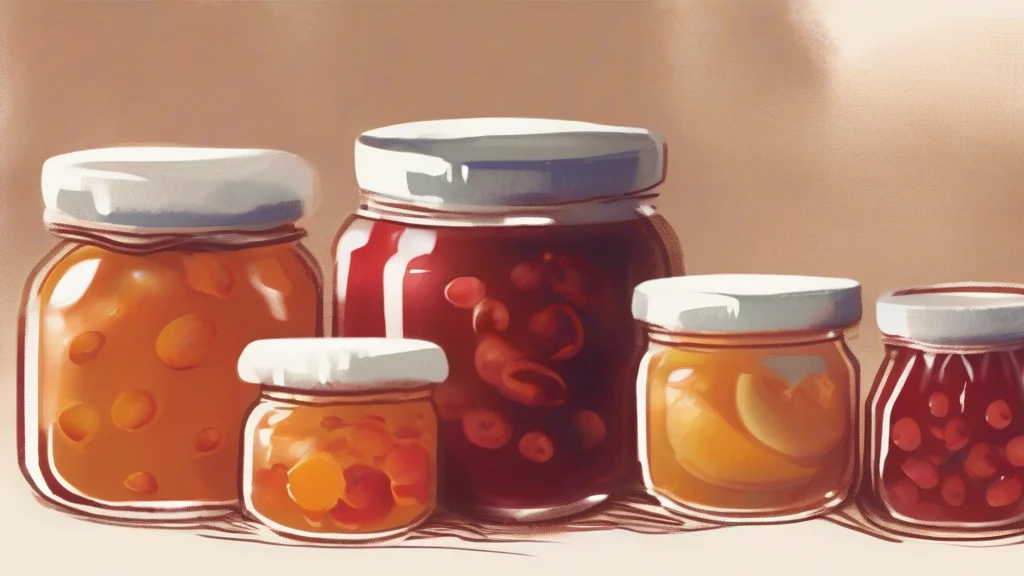
What does confiture mean?
Confiture is a noun denoting a sweet preserve made by cooking fruit slowly with sugar until it reaches a thick, spoonable consistency — essentially what English speakers usually call jam. Borrowed directly from French, the word retains an air of culinary refinement, which is why it appears far more often on restaurant menus, artisanal labels, and in cookbooks than in casual conversation. A breakfast table might offer apricot or wild strawberry confiture alongside butter and bread, and a cheese course may be paired with quince confiture for contrast. Because it comes from the same Latin root as 'confit' and 'comfit', it belongs to a family of words about preserving food by cooking, but unlike a confit (meat preserved in fat), a confiture relies on sugar as its preserving agent. For writers and cooks, using 'confiture' rather than 'jam' signals craft, tradition, and a touch of European elegance.
nounA sweet spread made from fruit cooked slowly with sugar until thick and glossy; a jam or preserve of the kind especially associated with French cookery.
- A sweet fruit preserve made by cooking fruit with sugar to a jam-like consistency.
"She stirred a spoonful of fig confiture into the yoghurt."
"For breakfast there was warm bread and a dish of wild strawberry confiture."
"The cheese board came with quince confiture and toasted walnuts."
The plural is rare and appears mostly when referring to several varieties of preserve, often in menus or shop listings.
"The pantry shelf held an assortment of homemade confitures."
The word on your jam jar is a direct import from French kitchens — 'confiture' literally means something that has been 'cooked together' with sugar.
Reviewed by Deb Chak, Editor. AI-assisted content curated by RJS Tech Solutions LLP.
Etymology of confiture
Confiture entered English from French, ultimately deriving from the Latin verb conficere, meaning 'to prepare' or 'to put together'. Through late Latin and Old French forms relating to cooked and preserved foods, the word came to designate fruit cooked with sugar, and was adopted into English in the seventeenth century as trade with France introduced refined preserves. It shares this Latin root with cognates such as confit, comfit, and confection, all of which describe foods prepared or preserved by cooking.
How confiture is actually used
Borrowed from French and still carrying continental connotations, the word is more common in upscale menus, cookbooks, and gourmet packaging than in everyday speech, where most speakers simply say jam. In British usage it overlaps almost entirely with 'jam'; American usage likewise treats it as a fancier synonym. The final syllable is typically pronounced like 'sure', reflecting its French origin.
Easily confused with confiture
A confit is food (traditionally meat) cooked and preserved in fat or its own juices, whereas a confiture is a sweet fruit preserve cooked with sugar.
A comfit is a small sugar-coated candy such as an almond dragée, while a confiture is a soft fruit preserve or jam.