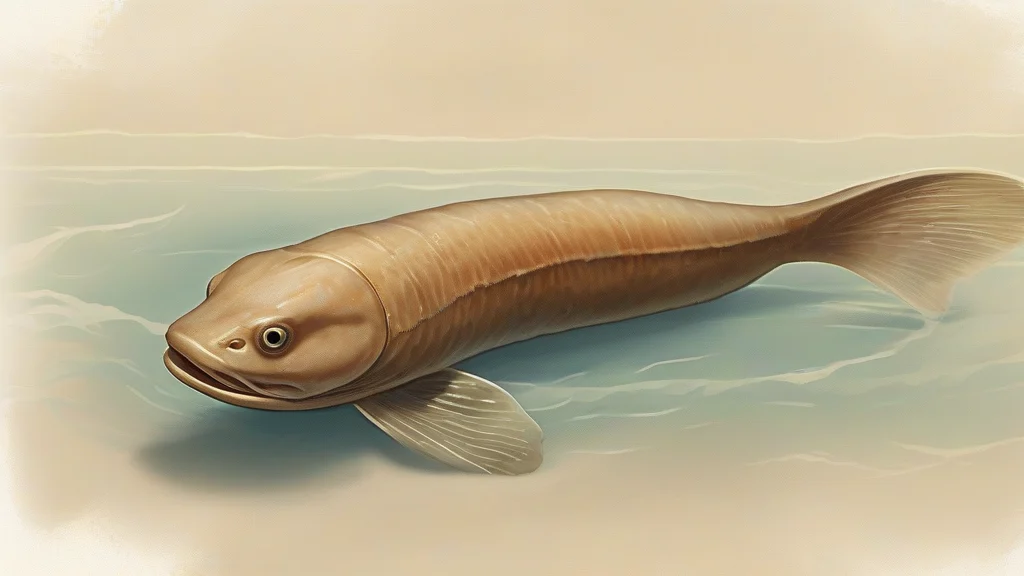
What does conger mean?
A conger is any of several large marine eels belonging to the genus Conger, most famously the European conger (Conger conger), which inhabits rocky seabeds and shipwrecks along the Atlantic coasts of Europe and North Africa. These powerful predators can exceed two metres in length and well over fifty kilograms in weight, making them among the largest eels in the world and a formidable quarry for sea anglers. In everyday English, 'conger' appears chiefly in British fishing and culinary contexts; speakers more often say 'conger eel' when using it as a modifier. The flesh is firm and flavourful, and smoked or braised conger features in traditional dishes around the Mediterranean and Iberia. The word derives from Latin conger, itself borrowed from Greek gongros, and has been part of English since at least the Middle Ages, carried forward largely through the vocabulary of fishermen and naturalists rather than everyday conversation.
nounA large marine eel of the genus Conger, especially the European conger (Conger conger), found in rocky coastal waters and prized as a food fish.
- A large marine eel of the genus Conger, particularly the European conger (Conger conger), valued as food and sought after by sea anglers.
"The fisherman hauled a massive conger out of the reef crevice where it had been hiding."
"The angler spent an hour battling an enormous conger before finally landing it on the quay."
"Smoked conger is considered a delicacy in several Mediterranean coastal towns."
Standard plural; also used collectively without inflection when referring to multiple specimens as a group.
"Several congers were spotted lurking among the rocks beneath the pier."
Congers can grow over two metres long and weigh more than 100 kilograms — the largest true eels in European waters.
Reviewed by Deb Chak, Editor. AI-assisted content curated by RJS Tech Solutions LLP.
Etymology of conger
'Conger' entered English through Latin conger, meaning a sea-eel, which was borrowed from the Greek word gongros. The term has been used in English since the medieval period, primarily within maritime, angling, and natural-history writing. It remains closely tied to its original zoological sense, with little figurative development.
Related word forms
How conger is actually used
Most often encountered in British English, particularly in contexts of sea angling and commercial fishing. When used attributively it usually appears as 'conger eel' rather than bare 'conger'.
Easily confused with conger
Morays are reef-dwelling eels of the family Muraenidae with distinctive open mouths and sharp teeth, while congers are larger bottom-dwelling eels of the family Congridae found in deeper coastal waters.