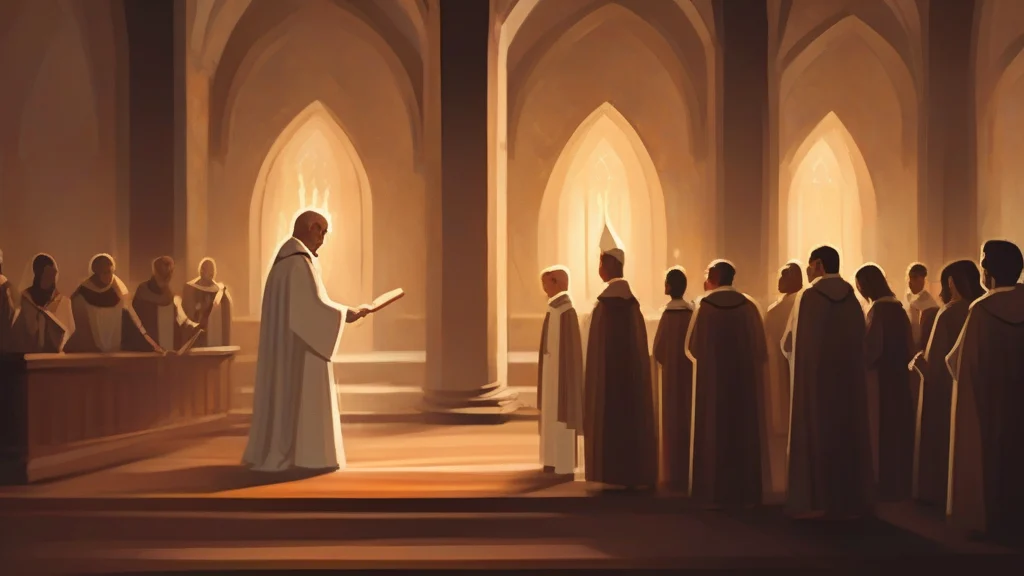
What does consecration mean?
Consecration is the act of dedicating a person, place, or object to a sacred purpose, typically through a formal religious rite. Most familiar from Christian tradition, it describes the ceremony by which a church becomes a place of worship, an altar becomes fit for sacrifice, or a bishop is ordained to office. The word carries strong connotations of holiness, solemnity, and permanent separation from ordinary use — what is consecrated is understood to belong to God and no longer serve secular ends. Beyond strictly religious settings, consecration appears figuratively to describe total devotion, as when someone speaks of the consecration of their life to medicine, justice, or art, lending the word an elevated, almost vow-like gravity. Derived from the Latin consecrare, meaning 'to make sacred,' it remains a living term in liturgy and theology, and its power lies in the way it marks a decisive boundary between the mundane and the holy. For anyone reading religious texts, history, or literature of devotion, consecration is an essential word to understand precisely.
The act or ceremony of dedicating something or someone to a sacred purpose, especially a church, altar, or bishop.
"The consecration of the new bishop took place before a full congregation."
In Anglican, Catholic, and Orthodox usage, consecration specifically denotes the ordination of a bishop, distinct from ordination of priests.
Devoted dedication of oneself or one's energies to a cause or purpose, used figuratively outside strictly religious rites.
"His memoir describes the consecration of his career to public health."
Rarely needed; plural appears mainly when discussing multiple ceremonies or historical events.
"The archive records several consecrations held during that decade."
From Roman altars to royal coronations, consecration is the ancient ritual that turns ordinary places and people into something set apart — and it has been doing so for over two thousand years.
Reviewed by Deb Chak, Editor. AI-assisted content curated by RJS Tech Solutions LLP.
Etymology of consecration
Consecration derives from the Latin consecrare, formed from com- ('together') and sacer ('sacred'), literally 'to make sacred together.' The noun entered English via Old French in the medieval period and was firmly established in ecclesiastical use by Middle English. It shares its root with words such as sacred, sanctify, sacrifice, and desecrate, all tracing back to the Latin sacer.
Related word forms
How consecration is actually used
Formal and reverent in register; most at home in religious, historical, and ceremonial contexts. In figurative use it carries an elevated, earnest tone and can sound grandiose in casual conversation.
Easily confused with consecration
Consecration is the act of making something sacred, while desecration is the opposite — violating or treating something sacred with disrespect.