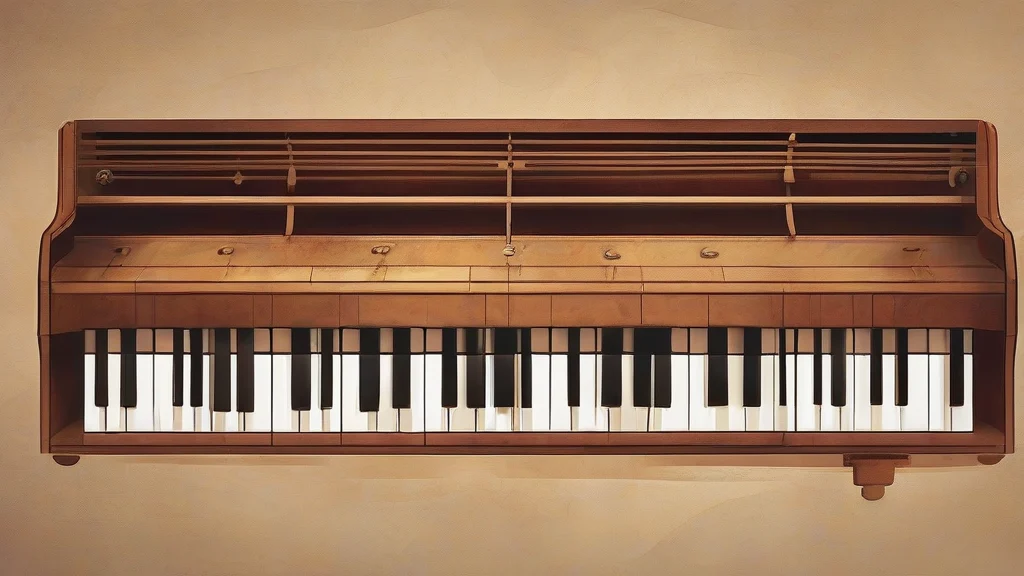
What does continuo mean?
Continuo refers to the continuous bass accompaniment that forms the harmonic foundation of most music from the Baroque era, roughly 1600 to 1750. Typically played on a harpsichord or organ and frequently doubled by a cello, bass viol, or bassoon, the continuo part was written as a bass line with numerals — known as figured bass — indicating which chords the keyboard player should improvise above it. This made the continuo player both an essential ensemble member and a spontaneous composer of real-time harmony. The term derives from the Italian phrase basso continuo, meaning 'continuous bass', reflecting its unbroken presence beneath the melodic lines. Today the word survives mainly in early-music circles, where historically informed performances of Bach, Handel, and Vivaldi rely on a skilled continuo section. It can denote either the bass line itself or the musicians performing it.
nounA continuous bass accompaniment, typically played on a keyboard instrument such as the harpsichord or organ, often reinforced by a cello or bassoon, that underpins Baroque ensemble music; also called figured bass or thoroughbass. The term also refers to the group of instruments performing this part.
- The continuous bass line with figures indicating harmony that underpins much Baroque music, realized on a keyboard instrument and often supported by cello or bassoon.
- The instrument or performer(s) realizing that bass line.
"The harpsichordist supplied a fluent continuo beneath the solo violin's soaring line."
"The cellist and harpsichordist formed the continuo for the trio sonata."
"Baroque orchestras still depend on a skilled continuo section to hold the harmony together."
The plural 'continuos' follows standard English -o noun patterns, but the word is frequently left uninflected in practice since it usually appears in singular contexts.
"Different continuos were used for the chamber works and the orchestral suites."
In Bach's day, virtually every piece of instrumental and vocal music rested on an invisible engine called the continuo — usually one harpsichordist improvising harmonies from nothing but numbers.
Reviewed by Deb Chak, Editor. AI-assisted content curated by RJS Tech Solutions LLP.
Etymology of continuo
The word comes from Italian basso continuo, meaning 'continuous bass', adopted into English musical terminology during the seventeenth century as the practice spread from Italy across Europe. It shares the Latin root continuare ('to join together, make continuous') with words such as continue, continuity, and continuation.
Related word forms
How continuo is actually used
Primarily used in classical music scholarship and performance contexts; the fuller Italian form 'basso continuo' is equally common. Plural is conventionally 'continuos', though the word is often treated as invariant in informal usage.
Easily confused with continuo
Continuo is a musical bass accompaniment in Baroque music, while continuum denotes a continuous sequence or unbroken whole.