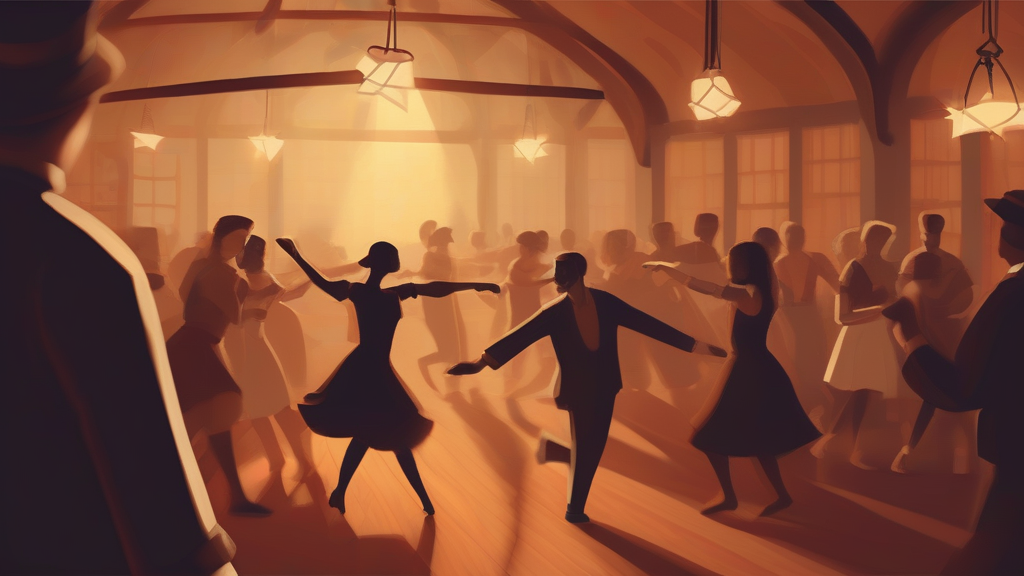
What does contradance mean?
A contradance is a social folk dance in which couples stand in two long facing lines and move through repeating figures — circles, swings, chains, and promenades — guided by a caller who announces each move before the music carries the dancers through it. The form descends from the English country dance of the seventeenth century and was carried to America, where it took firm root; today the word is especially associated with the thriving contradance community of New England and beyond, danced to live fiddle-driven reels and jigs. The term can also denote a piece of music composed for such a dance, as in the contradances of Mozart's era. Connotations are warm, communal, and unpretentious: contradance is participatory by design, welcoming beginners with no partner required. Though somewhat specialized, the word remains useful for anyone writing about traditional dance, early music, or American folk culture.
A folk dance in which couples form two facing lines and perform figures called out by a caller, descended from the English country dance.
"She drove three hours through the snow just to attend the Saturday night contradance."
Especially associated with the New England contradance tradition in the United States.
A piece of music, usually in duple meter, composed or played to accompany a contradance.
"The program opened with a sprightly contradance attributed to Mozart."
Regular plural; used both for multiple instances of the dance event and for multiple pieces of contradance music.
"The collection includes dozens of eighteenth-century contradances."
Despite its French name meaning 'opposite dance,' the contradance likely traces back to the English country dance — the two traditions crossed the Channel and came home again.
Reviewed by Deb Chak, Editor. AI-assisted content curated by RJS Tech Solutions LLP.
Etymology of contradance
Contradance comes from French contre-danse, adopted into English in the late seventeenth century. The French name has traditionally been explained as referring to dancers arranged opposite one another in facing lines, though some scholars believe contre-danse was itself borrowed from the English "country dance," making the origin circular and debated. Cognates appear across Europe, such as the German Kontratanz and Italian contraddanza, reflecting the pan-European popularity of the form in the eighteenth century.
How contradance is actually used
In American usage, contradance (often styled "contra dancing") refers especially to the living New England tradition descended from English country dance; it is a friendly, participatory activity rather than a performance art. The word is somewhat specialized — most speakers would simply say "folk dance" or "country dance."
Easily confused with contradance
"Contra-dance" is merely a hyphenated variant spelling of the same word, not a different term.
A cotillion is a formal ballroom dance of French origin with set figures, whereas a contradance is a folk dance performed in longways lines with a caller.