What does coqui mean?
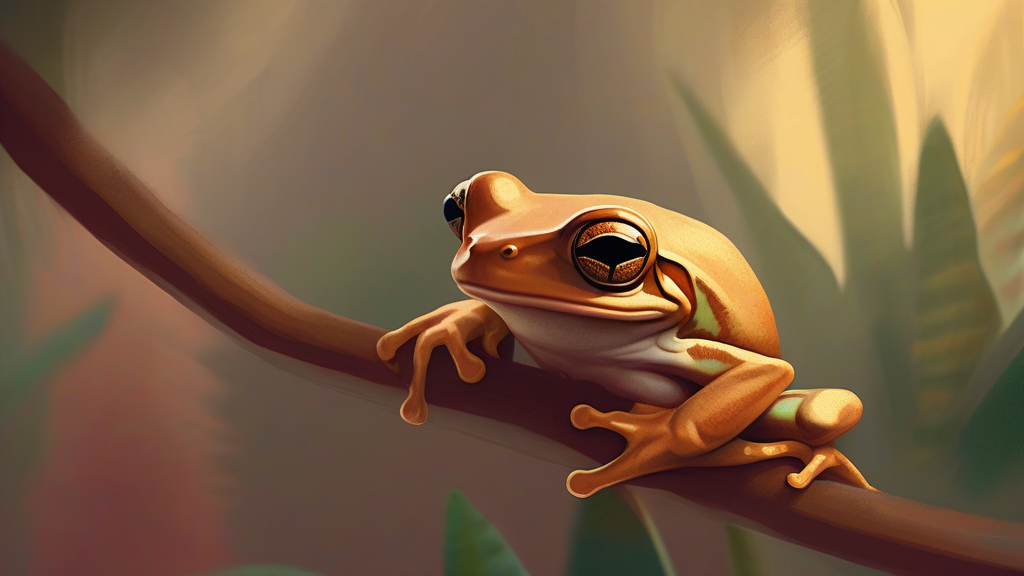
The coqui is a small tree frog native to Puerto Rico, belonging to the genus Eleutherodactylus, best known for the remarkably loud call that gives it its name: a repeated two-note "ko-kee" produced by the males, chiefly at night. Despite measuring only one to two inches, a single coqui can be heard at considerable distance, and dense choruses define the soundscape of Puerto Rican forests from sea level into the mountains. The word comes from Spanish, which took it from Taíno, the language of Puerto Rico's indigenous people, and it has come to carry deep cultural weight as an unofficial emblem of Puerto Rican identity. Coquis appear in songs, folklore, and literature of the island, and emigrants often speak wistfully of missing their song. Related species across the Caribbean are also called coquis or whistling frogs, and the common coqui has been introduced elsewhere, notably Hawaii, where its loud call has made it controversial.
nounA small arboreal frog native to Puerto Rico, of the genus Eleutherodactylus, famous for the loud, high-pitched "ko-kee" mating call sung by the males, especially at night. The word is also used more broadly in the Caribbean for related whistling frogs.
- The Puerto Rican tree frog Eleutherodactylus coqui, whose males produce a distinctive two-note "ko-kee" call.
- Any of several related Caribbean frogs of the genus Eleutherodactylus, sometimes called whistling frogs.
"The coqui sings its two-note song from the rainforest canopy all night long."
"As dusk fell over El Yunque, the coquis began their evening chorus."
"Puerto Ricans living on the mainland often say they miss the sound of the coqui most of all."
The standard English plural adds -s; some writers retain the Spanish-influenced form "coquíes," but "coquis" predominates in English usage.
"Hundreds of coquis fill the forest with sound after nightfall."
In Puerto Rico, the tiny coqui's nightly song is so beloved that it's an unofficial national symbol — and legend says the frog cannot survive singing anywhere but home.
Reviewed by Deb Chak, Editor. AI-assisted content curated by RJS Tech Solutions LLP.
Etymology of coqui
The word "coqui" entered English through Spanish, which adopted it from Taíno, the Arawakan language spoken by the indigenous people of Puerto Rico and the wider Greater Antilles; the name imitates the frog's characteristic two-note call. It was applied to the island's abundant tree frogs long before scientific classification assigned them to the genus Eleutherodactylus in the nineteenth century. Because it derives from Taíno rather than Latin or Greek, it has no true cognates among European vocabulary, making it a rare example of an indigenous American word that survives in everyday use.
How coqui is actually used
The word is borrowed from Spanish and carries strong cultural resonance for Puerto Ricans, functioning as an informal symbol of national identity. In English text it is usually written without the accent as "coqui," though the Spanish-stressed form "coquí" also appears. The standard English plural is "coquis."
Easily confused with coqui
The accented spelling "coquí" simply marks the Spanish stress on the final syllable; both spellings refer to the same frog.
A coquette is a flirtatious woman, whereas a coqui is a small Puerto Rican tree frog.