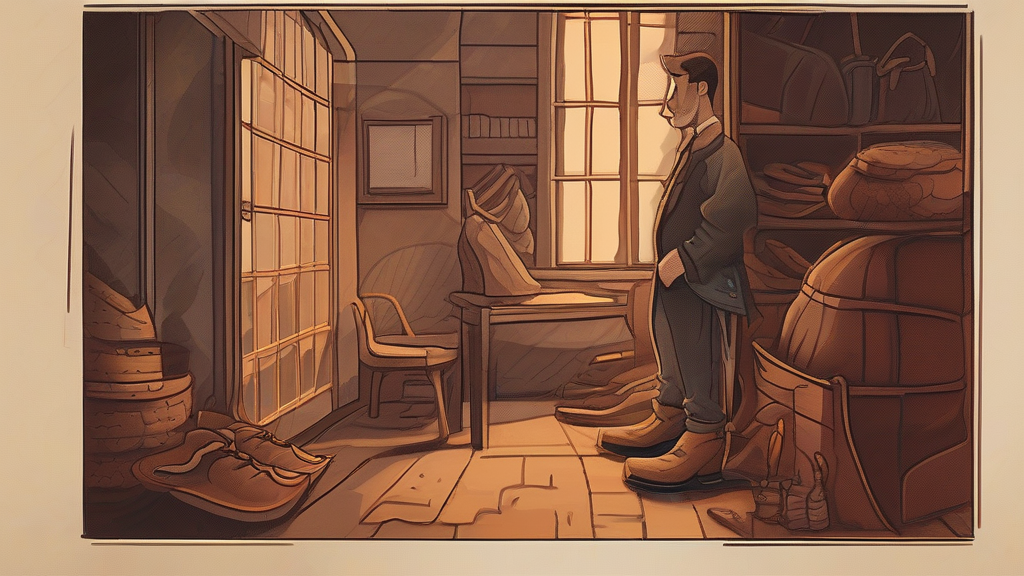
What does cordwainer mean?
A cordwainer is a maker of shoes, particularly one skilled in working fine leather into new footwear. Though largely replaced in everyday speech by 'shoemaker', the word survives as a badge of craft pride among artisan boot- and shoemakers, and it preserves a distinction that the trade has long defended: a cordwainer creates shoes, whereas a cobbler merely repairs them. The term entered English via Anglo-Norman from 'cordewan', meaning leather from Córdoba in Spain, whose supple goatskin was prized across medieval Europe for fine shoes. Its historical weight is reflected in institutions such as the Worshipful Company of Cordwainers, one of the ancient livery companies of the City of London, and in the former Cordwainers College, a renowned London school of footwear design. Today the word evokes tradition, handwork, and quality, appearing most often in heritage branding, craft writing, and historical contexts rather than casual conversation.
nounA cordwainer is a shoemaker, especially one who works with fine leather to make new shoes. Historically, the term distinguished makers of shoes from cobblers, who repaired them.
- A person who makes shoes, especially from fine leather; historically distinct from a cobbler, who repaired footwear.
"The last traditional cordwainer in the village still cuts every pair of uppers by hand."
"Apprenticed at fourteen, he spent his life as a cordwainer in Northampton."
"The Worshipful Company of Cordwainers remains one of the livery companies of the City of London."
Regular plural; often used collectively when referring to members of the historical trade or guilds.
"In the seventeenth century, the city's cordwainers formed one of its most influential guilds."
A cordwainer doesn't work with cord at all — the name comes from Córdoba, Spain, whose luxury goat-leather 'cordwain' was the finest shoe material in medieval Europe.
Reviewed by Deb Chak, Editor. AI-assisted content curated by RJS Tech Solutions LLP.
Etymology of cordwainer
Cordwainer derives from Anglo-Norman French 'cordonwan', from 'cordewan', denoting a type of fine leather originally made in Córdoba, Spain — the word ultimately reflecting the city's name. In Middle English it came to mean a worker in such leather, and hence a shoemaker. It shares its root with 'cordovan', which directly denotes this Spanish leather, and more distantly with other words borrowed through French from Latin 'cor' (heart), such as 'cordial' and 'accord'.
How cordwainer is actually used
The word is somewhat formal and historical in tone today, though it is proudly retained by artisan shoemakers and by trade institutions such as the Cordwainers' guilds and the fashion school Cordwainers College in London. Within the trade it carries a connotation of craftsmanship and higher status than 'cobbler'.
Easily confused with cordwainer
A cobbler repairs shoes, while a cordwainer makes new shoes from new leather — a distinction the trade itself has long insisted upon.