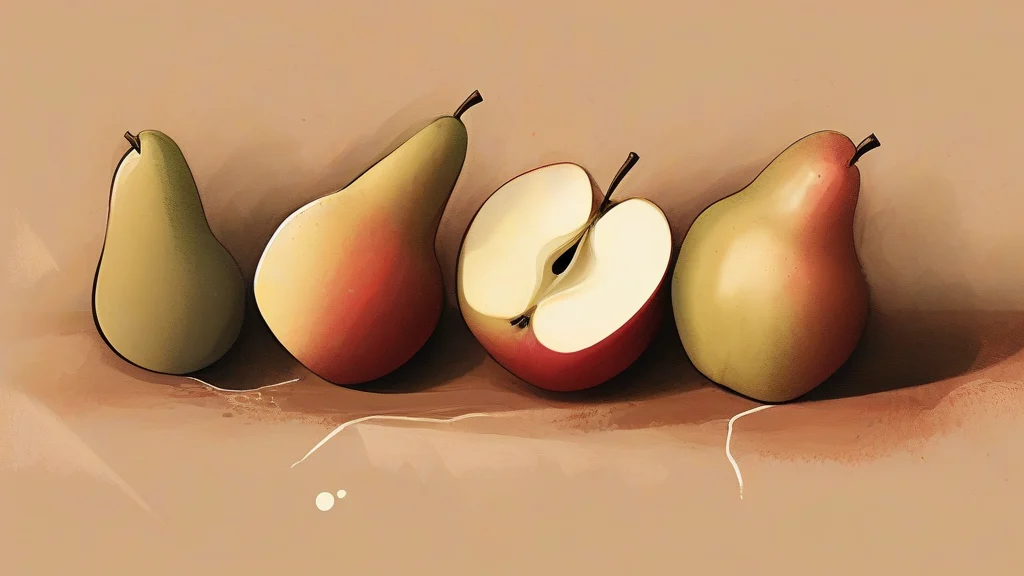
What does cored mean?
"Cored" is the past tense and past participle of the verb "to core," meaning to remove the central, seed-bearing part of a fruit or vegetable. In everyday usage it most often functions adjectivally in culinary contexts: a cored apple has had its fibrous center extracted, leaving a hollow ready to be filled with stuffing, sugar, or spices. The word is common in recipes and food writing, where it frequently appears alongside related preparation verbs such as "peeled," "pared," and "seeded." Beyond the kitchen, "cored" can describe the removal of a central section from cylindrical objects, as when a drill cores a sample from rock or ice. The underlying noun "core" is thought to derive ultimately from the same Indo-European root that gave English "heart," making the act of coring something literally an act of taking out its heart. The word is neutral in register, universally understood across British and American English.
verb (past tense and past participle of "core")Having had its central part removed, especially the core of a fruit such as an apple or pear. Also the simple past tense of "to core": to remove the central, seed-containing part of something.
- (of fruit) having had its central seed-containing part removed — e.g. "a cored apple"
- simple past tense of "core": removed the central part of something
"She cored the apples before filling them with cinnamon-spiced oats."
"The recipe calls for cored pears poached in red wine."
"He carefully cored each tomato with a small paring knife."
Every time you core an apple, you're etymologically removing its "heart" — the word "core" likely comes from the same root as "heart" itself.
Reviewed by Deb Chak, Editor. AI-assisted content curated by RJS Tech Solutions LLP.
Etymology of cored
The verb "core" derives from the noun "core," meaning the central or innermost part of something. The noun's origin is uncertain but is generally traced to Old French or Latin roots connected with the heart; many lexicographers link it to Latin "cor" (heart), which also yields words like "cordial" and "cardiac." The verb developed naturally in English, first attested by at least the 17th century, meaning to extract the central part of a fruit. Its participial form "cored" has since become standard in both British and American usage.
Related word forms
How cored is actually used
"Cored" appears most often as a participial adjective in cooking contexts, where it typically pairs with other preparation terms such as "peeled," "seeded," or "sliced." As a verb form it is straightforward and neutral in register.
Easily confused with cored
"Chord" is a musical term for a group of notes sounded together, while "cored" describes something whose central part has been removed.
"Cored" is spelled with one r; there is no standard spelling "corred."