
What does corralling mean?
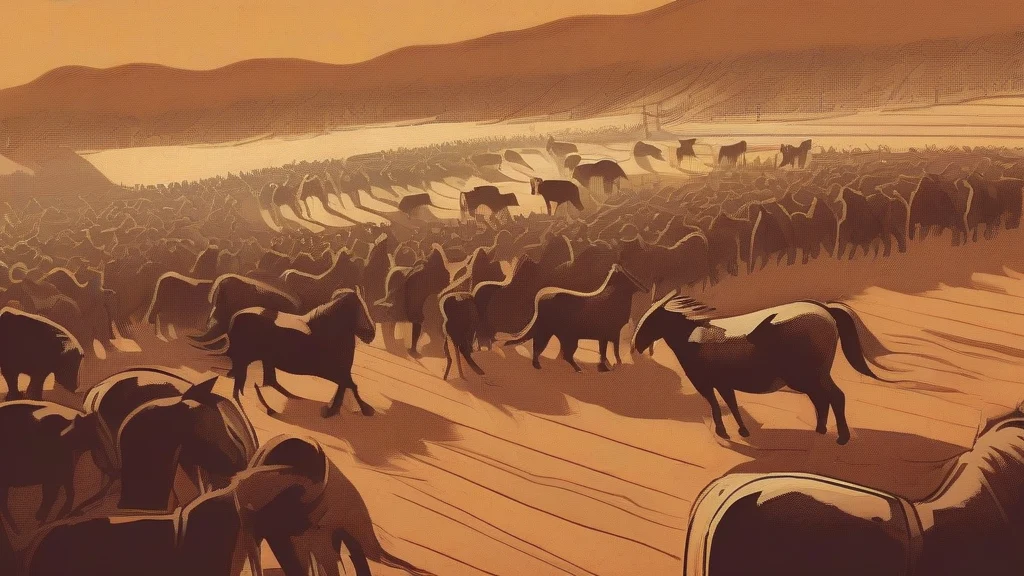
"Corralling" is the present participle of "corral," meaning to gather and confine livestock within an enclosure, and by extension to round up or contain people or things as if they were animals being penned. The term comes directly from the vocabulary of the American West, where corralling cattle was a routine part of ranch work, and it retains a distinctly rural, practical flavor even when used figuratively. Today one might hear about police corralling protesters, organizers corralling volunteers, or editors corralling submissions — uses that suggest effortful containment of scattered or unruly elements. The word carries a mildly forceful connotation: what gets corralled is typically gathered against some natural inclination to disperse. It remains far more frequent in North American English than elsewhere, though the figurative sense is widely understood.
Present participle of "corral": to drive animals into an enclosure, or figuratively to confine or round up people or things.
"They were corralling the sheep into the barn before nightfall."
Takes both literal animal objects and figurative ones (people, crowds, resources).
The action or process of penning animals or figuratively rounding up people or things.
"The corralling of the cattle took most of the day."
Gerund use is less common than the verbal use; usually appears with a determiner or possessive.
Every time you 'corral' a group of friends into one place, you're speaking a little Spanish — the word rode straight out of the American Southwest.
Reviewed by Deb Chak, Editor. AI-assisted content curated by RJS Tech Solutions LLP.
Etymology of corralling
"Corralling" derives from "corral," which entered English in the early 19th century from Spanish, during the era of American expansion into Mexican and Spanish-speaking territories of the West. The Spanish word itself traces back through Vulgar Latin *currale, denoting an enclosure for carts, ultimately from Latin currere, meaning "to run." This makes "corral" a cousin of English words like "courier" and "current." The verb followed soon after the noun, and "corralling" emerged naturally as its participial form.
Related word forms
How corralling is actually used
Most common in North American English, reflecting its ranching origins. The literal livestock sense is standard; the figurative use (corralling people, votes, resources) is informal-to-neutral and often carries a slightly forceful connotation of herding reluctant subjects together.
Easily confused with corralling
'Coral' refers to the hard calcified substance or marine organism forming reefs, whereas 'corralling' is the act of penning in animals or figuratively rounding people or things up.