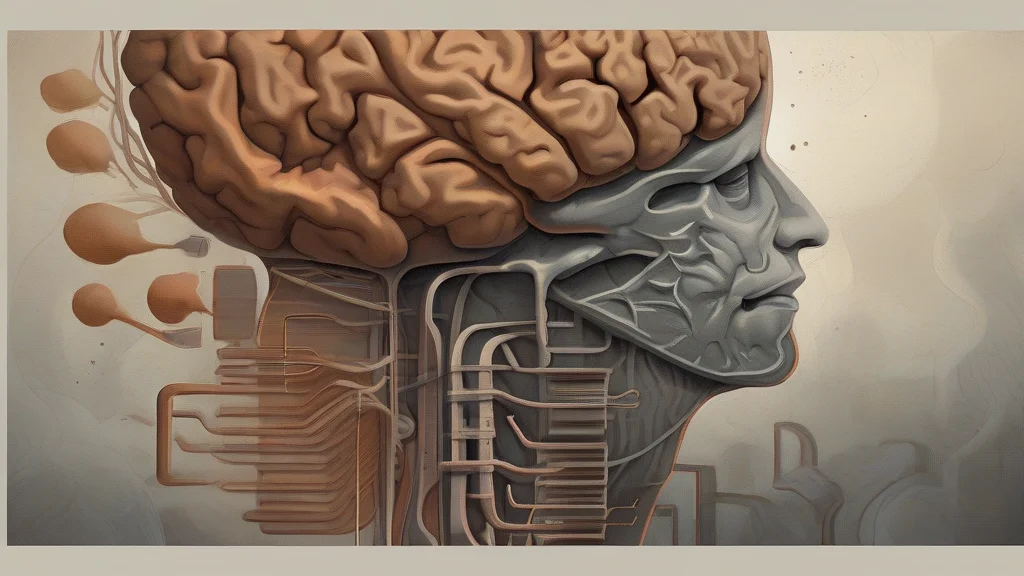
What does cortex mean?
A cortex is the outer layer of an organ or body structure, and the word is most closely associated with the cerebral cortex — the folded sheet of grey matter that covers the brain and underlies our capacity for language, memory, perception, reasoning, and voluntary movement. In anatomy and medicine, the term is usually paired with a modifier that names the organ involved, as in "prefrontal cortex," "renal cortex," or "adrenal cortex," each designating a distinct outer region with its own specialized function. The word entered English in the seventeenth century from Latin, where cortex literally meant "bark" — the protective rind of a tree — a metaphor that still captures its essential sense: a substantial outer envelope wrapped around something inner. Its plural, cortices, follows the Latin pattern. Because it names the seat of so much of what makes human cognition distinctive, "cortex" carries strong scientific connotations and is a staple of neuroscience writing and popular science alike.
The outer layer of an organ or structure, especially the folded grey matter of the cerebrum responsible for higher mental functions; by extension, the outer region of organs such as the kidney or adrenal gland.
"Neuroscientists mapped the activity of the motor cortex while participants imagined moving their hands."
Usually qualified by an adjective naming the organ or region, e.g. "prefrontal cortex," "adrenal cortex."
The bark or rind of a tree or woody plant (botanical and historical sense).
"Early herbalists described the cortex of the willow as a source of medicinal compounds."
This older sense survives mainly in botanical terminology and historical texts.
The standard learned plural follows the Latin declension; "cortexes" is an anglicized alternative seen occasionally, but "cortices" is preferred in scientific writing.
"The study compared cortical thickness across several regions of the cortices."
Your cortex is wrinkled on purpose — all those folds cram roughly the area of a dinner table's worth of processing tissue inside your skull.
Reviewed by Deb Chak, Editor. AI-assisted content curated by RJS Tech Solutions LLP.
Etymology of cortex
English borrowed "cortex" in the early seventeenth century directly from Latin, where the word meant "bark" or "rind," especially the bark of a tree. It is generally connected to Latin "corium," meaning hide or leather, suggesting a shared ancient root concerned with skins and coverings. Anatomists later extended the tree-bark metaphor to the body, applying "cortex" to the outer layers of organs such as the brain and kidneys, while botany retains the older literal sense. The adjective "cortical" was formed from it to describe anything relating to these outer layers.
Related word forms
How cortex is actually used
"Cortex" is primarily a technical and scientific term, common in anatomy, neuroscience, botany, and medicine; it rarely appears in casual conversation except in fixed scientific pairings like "prefrontal cortex." The plural "cortices" is standard in scholarly writing, though "cortexes" also occurs informally. In anatomy it is almost always paired with a specifying modifier (cerebral, renal, adrenal), since "cortex" alone does not indicate which organ is meant.
Easily confused with cortex
The cortex is the outer layer of an organ such as the brain or kidney, while the medulla is its innermost region.