
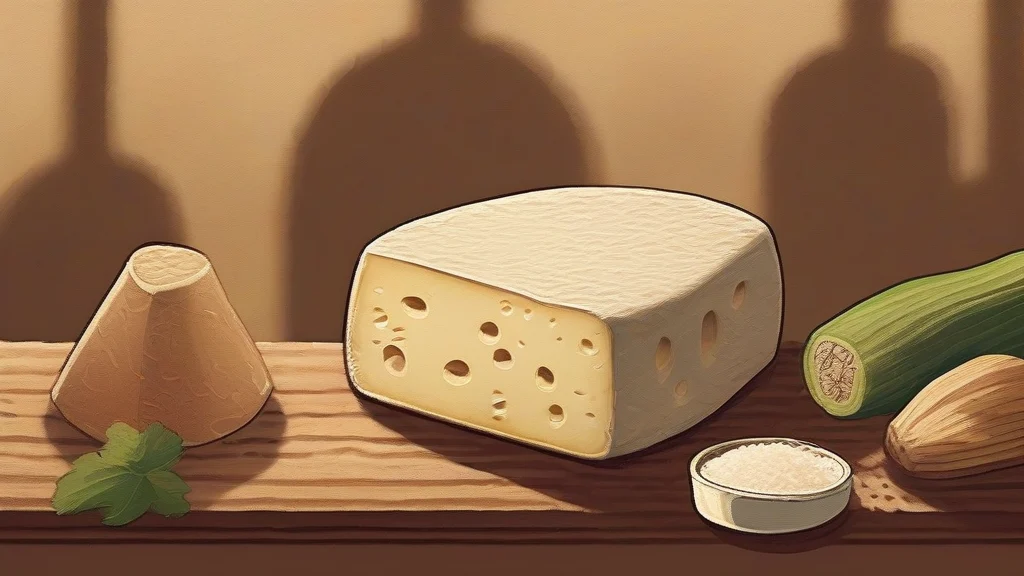
What does cotija mean?
Cotija is a firm, dry, salty Mexican cheese made from cow's milk and commonly sold in a hard wheel or block. It is especially useful for scattering over tacos, enchiladas, soups, and other dishes or for crumbling into a topping. Although it resembles feta, cotija is generally firmer, drier, and less briny, giving it a more pronounced savory character. In English, cotija functions as a specialist culinary term and is often treated as a mass noun rather than something counted as individual cheeses. The name comes from Cotija, a town in Michoacán, Mexico, and is part of the cheese's distinctive regional identity. Knowing cotija is especially useful when reading menus or recipes because it identifies a crumbly, hard cheese rather than a softer, creamy Mexican cheese. Its combination of texture, saltiness, and widespread use in Mexican cooking makes it both practical and memorable.
nounCotija is a firm, dry, salty Mexican cheese made from cow's milk and commonly sold in blocks or wheels for crumbling or grating. It is named after the town of Cotija in Michoacán, Mexico.
- A firm, dry, salty Mexican cheese made from cow's milk and commonly crumbled, grated, or served in chunks.
"She finished the tacos with a generous scattering of crumbled cotija."
"The enchiladas were topped with cotija and fresh coriander."
"She crumbled cotija over the soup just before serving it."
The plural is rarely needed because cotija normally refers to cheese by type or as a mass noun.
"The display included several whole cotijas."
Its hometown is baked into its name: cotija takes its name from the town of Cotija in Michoacán.
Reviewed by Deb Chak, Editor. AI-assisted content curated by RJS Tech Solutions LLP.
Where does cotija come from?
The English word is borrowed from Spanish cotija, the name of a cheese associated with the town of Cotija in Michoacán, Mexico. Spanish cotija derives from that place-name, so the English culinary term preserves the cheese's toponymic origin rather than describing its texture or ingredients.
How cotija is actually used
In Mexico, the name is associated with the traditional cheese of Cotija in Michoacán, while English-language markets often use it more broadly for Mexican-style crumbly cheese. It is specialist culinary vocabulary and is normally treated as a mass noun.
Easily confused with cotija
Although both are salty cheeses often crumbled over food, cotija is generally firmer and drier, while feta is softer and more distinctly briny.