What does cotillion mean?
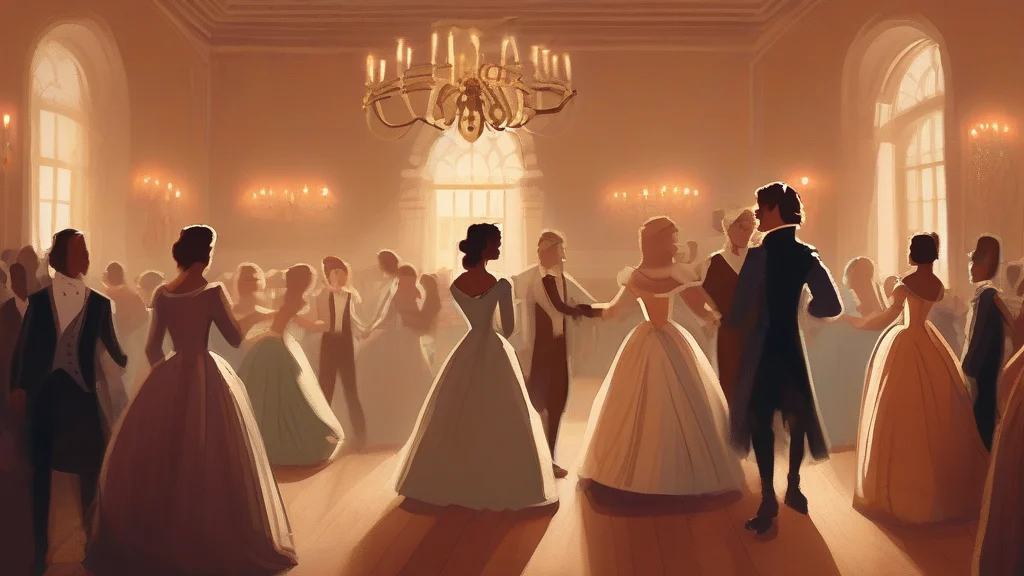
A cotillion is, in its most common modern sense, a formal ball — often one at which young women are presented to society as debutantes, or at which children and teenagers learn social dancing and etiquette. The word also names an 18th-century French dance for couples, built from a chain of intricate figures in which partners changed frequently, making it one of the most popular ballroom dances of its era before the waltz displaced it. Derived from the French 'cotillon', originally meaning a petticoat, the term evokes the swirling skirts of dancers. Today, 'cotillion' carries connotations of tradition, formality, and genteel upbringing, particularly in American Southern and East Coast communities where cotillion programs remain a rite of passage. It appears both in everyday speech about such events and in historical writing about European and colonial dance culture.
nounA cotillion is a formal ball or dance, especially one at which young people are presented to society; it also denotes an 18th-century French dance for couples, characterized by intricate figures and frequent changes of partners.
- A formal ball or dance, especially one at which debutantes are formally presented to society (chiefly North American usage).
- An 18th-century French couple dance with elaborate figures and changing partners, popular across Europe and colonial America.
- In music, a piece composed in the style or rhythm of that dance.
"The debutante's family spent months preparing for her presentation at the annual cotillion."
"She wore a white gown to her first cotillion, where she was introduced alongside twenty other debutantes."
"The orchestra closed the evening with a lively cotillion that had every couple changing partners across the floor."
Regular plural formation. Used when referring to multiple events or multiple instances of the historical dance.
"The city hosted several cotillions throughout the season."
The word 'cotillion' literally traces back to a French petticoat — because the original 18th-century dance was named after the swish of underskirts on the dance floor.
Reviewed by Deb Chak, Editor. AI-assisted content curated by RJS Tech Solutions LLP.
Etymology of cotillion
Cotillion comes from the French 'cotillon', originally meaning a petticoat or underskirt, a diminutive of 'cotte' (a coat or tunic), which itself derives from Old Norse 'korta'. The name was given to the 18th-century French dance, likely from the dancers' swishing petticoats or a song lyric mentioning them. The word entered English in the early 18th century as the dance spread through European courts and later America. Cognates include French 'coterie' and related terms from the same Germanic root that gave English 'coat'.
How cotillion is actually used
In modern American English, 'cotillion' most often refers to a formal social event for adolescents or debutantes, sometimes involving etiquette instruction. The historical sense — the 18th-century dance itself — is now largely confined to music and dance history. The spelling 'cotillon' is a common variant, particularly in British sources.
Easily confused with cotillion
A quintillion is a very large number (10 to the power of 18), while a cotillion is a formal dance or ball.
'Cotillon' is simply an alternative (often French-influenced) spelling of the same word.