
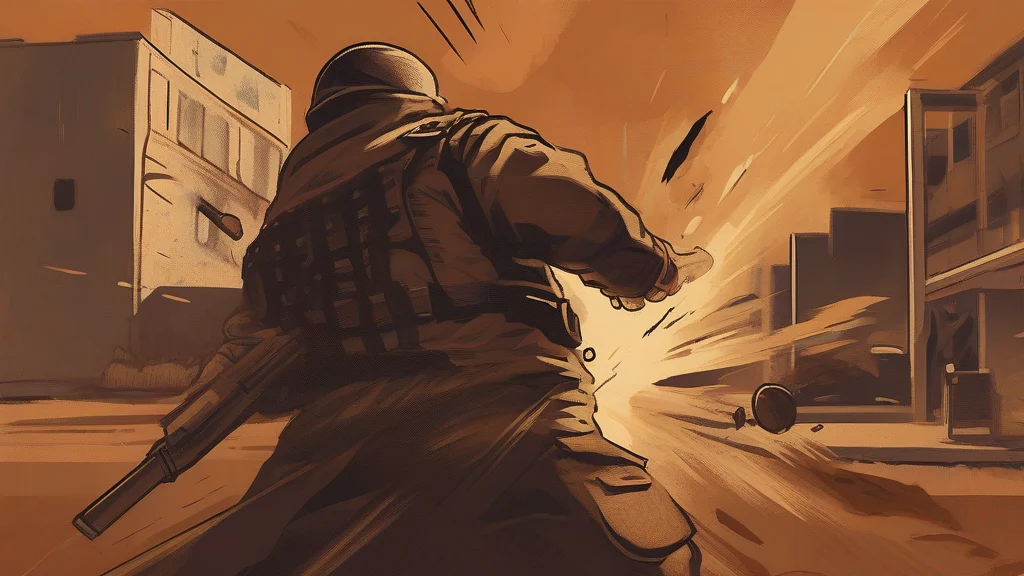
What does counterblow mean?
Counterblow is a noun meaning an answering blow, especially one delivered in return for an earlier blow or attack. In its literal sense, it belongs to the language of boxing, fighting, and warfare: one person or side strikes back after receiving an attack. It can also be used figuratively for an action or measure that offsets an earlier move, such as a retaliatory announcement, policy, or legal action. The word is uncommon in contemporary English and often carries an old-fashioned, combative tone. Nevertheless, it is useful because it names the reciprocity in a conflict with a single, vivid expression. Its formation is also transparent: the prefix counter- indicates opposition or return, while blow identifies the kind of action involved. Although everyday speakers would normally say return blow, retaliatory blow, or counterattack, counterblow remains especially effective in literary accounts of conflict and in historical descriptions of combat.
nounA blow or attack delivered in response to another. The term may also describe an answering action intended to offset an earlier move.
- A blow, attack, or retaliatory action made in response to an earlier one.
"He absorbed the first blow and answered with a fierce counterblow."
"The boxer slipped the jab and landed a counterblow that briefly stunned his opponent."
"The publication was issued as a counterblow to the accusations against the company."
The regular plural is counterblows.
"The exchange ended with a series of rapid counterblows."
A counterblow turns an attack back on its attacker—one compact word for the answering blow.
Reviewed by Deb Chak, Editor. AI-assisted content curated by RJS Tech Solutions LLP.
Where does counterblow come from?
The compound was formed in English from counter-, meaning against or in opposition, and blow, a blow or stroke. The prefix counter- comes through Anglo-French contre from Latin contra, while blow ultimately derives from Old English. The compound is attested from the early modern period and now survives mainly in specialized, historical, or deliberately archaic prose.
How counterblow is actually used
Rare and somewhat archaic or literary. It is most natural in descriptions of physical combat, conflict, or strategic retaliation, while figurative uses may sound deliberately old-fashioned.