
What does countermine mean?
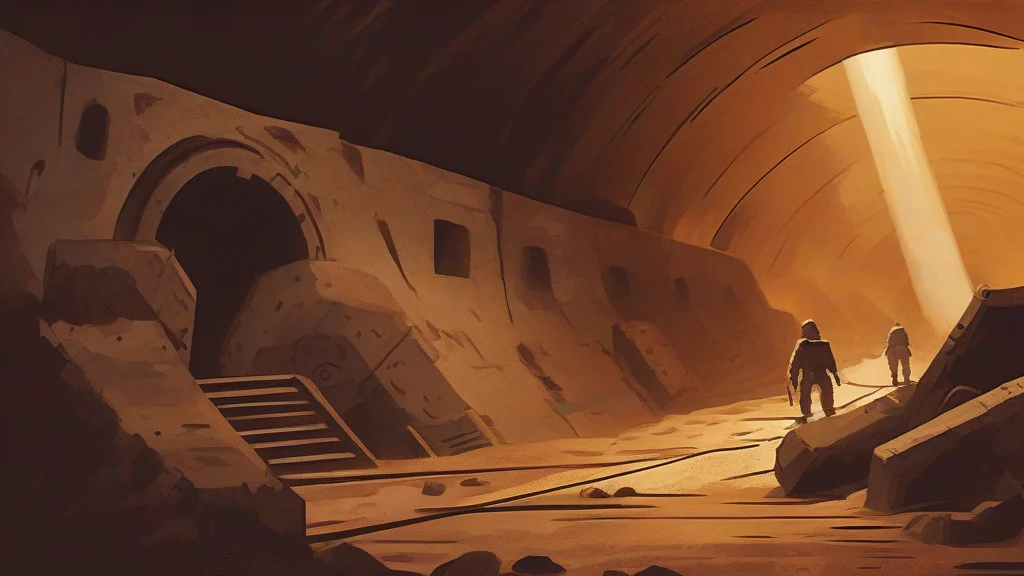
A countermine is a defensive tunnel excavated to meet and neutralize an enemy's offensive mine, most famously during the siege warfare of the sixteenth and seventeenth centuries. When attackers dug galleries beneath fortress walls to plant explosive charges, defenders would sink their own shafts to intercept them — listening through the earth for the sound of digging, then breaking into the hostile tunnel or detonating a charge to collapse it. The word combines 'counter' with 'mine,' reflecting its purely reactive purpose. By extension, countermine can describe any defensive move crafted to defeat a rival's secret plot, though this figurative sense remains uncommon and somewhat literary. Today the term survives mainly in military history, where it evokes the claustrophobic, high-stakes underground duels fought between miners and counterminers beneath beleaguered cities.
A tunnel dug underground to intercept and destroy an enemy's mine in siege warfare.
"The defenders drove a countermine into the attackers' gallery and destroyed it with a barrel of powder."
Chiefly historical, associated with early modern siege warfare.
To counteract an enemy's mine by digging a countermine, or more generally to take measures to defeat another's secret plan.
"The garrison countermined the attackers' tunnel before the charge could be fired."
Less common than the noun; used mostly in military-historical contexts.
Standard plural, following regular English inflection.
"Both sides sank dozens of countermines beneath the ramparts during the long siege."
Long before drones, sieges were won underground — and when enemy miners tunneled toward your walls, your only hope was to dig a countermine and blow their work sky-high first.
Reviewed by Deb Chak, Editor. AI-assisted content curated by RJS Tech Solutions LLP.
Etymology of countermine
Countermine derives from French contre-mine, formed from 'counter' plus 'mine,' the latter tracing back through medieval Latin mina to Latin roots associated with projecting veins of ore and, distantly, to the Indo-European root that also yields 'menace' and 'prominent.' The term entered English in the late sixteenth century, coinciding with the era of gunpowder siegecraft when mining and countermining became decisive arts of fortification warfare.
Related word forms
How countermine is actually used
Primarily a technical military term, now largely historical except in accounts of early modern siege warfare; figurative use is rare and literary. The verb form means to counteract with a countermine.
Easily confused with countermine
Countermand means to revoke or cancel an order, while a countermine is a defensive tunnel dug to neutralize an enemy's mine.