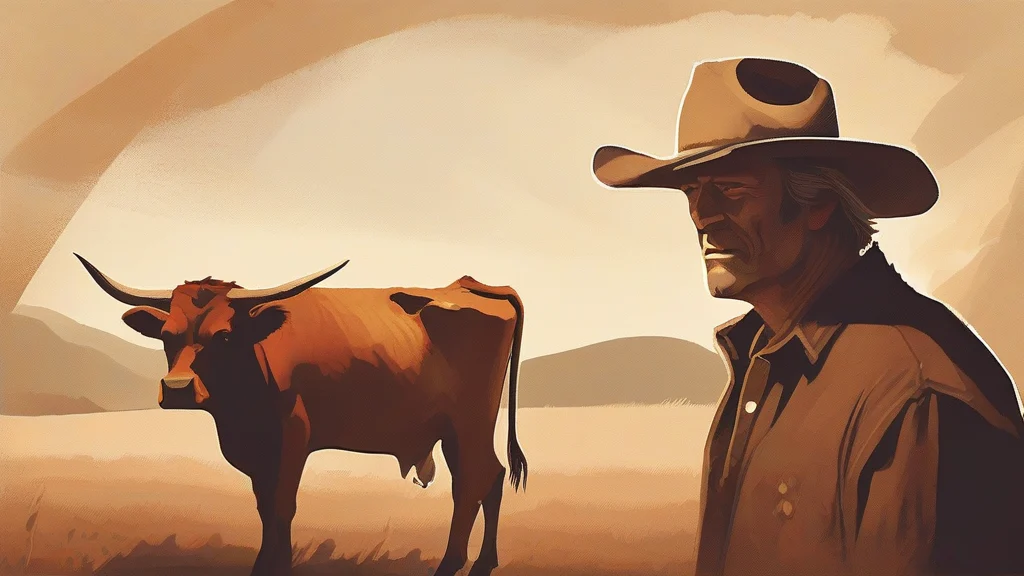
What does cowman mean?
A cowman is a man engaged in raising, owning, or tending cattle. The word is most strongly associated with the American West, where it described men who ran cattle operations on the open range — often substantial landowners and operators, in contrast to the cowboys they hired. In British and dialectal English, 'cowman' has also long been used for farmers or workers whose livelihood centered on dairy or beef herds, and the term survives in rural speech. Its connotations are practical and pastoral rather than glamorous: the cowman evokes hard work, livestock knowledge, and a close relationship with the land and seasons. Related terms such as cattleman, stockman, and herdsman overlap considerably in meaning, with regional and occupational shades of difference. Though less common in everyday modern speech than its cinematic cousin 'cowboy,' the word remains useful for describing the cattle-keeping side of rural life accurately and without romantic excess.
nounA man who owns, raises, or tends cattle, especially one associated with ranching or livestock farming. In older British dialect usage, it can also denote a cattle dealer or farmer who keeps cows.
- A man who owns or raises cattle, especially on a ranch.
- A man whose work is tending or driving cattle; a cattle worker or herdsman.
- (Chiefly British, historical/dialectal) A farmer or dealer who keeps or sells cows.
"The old cowman knew every trail across the range better than any map could show."
"The cowman rode out at dawn to check on the new calves."
"As a young cowman in Wyoming, he learned to read both the weather and the market."
Standard plural; formed regularly like other '-man' compounds.
"The territory's cowmen gathered each year to sort out grazing rights."
On the nineteenth-century American frontier, the cowman was usually the wealthy owner of the herd — while the cowboys he employed did the actual riding.
Reviewed by Deb Chak, Editor. AI-assisted content curated by RJS Tech Solutions LLP.
Etymology of cowman
The word 'cowman' is a straightforward English compound of 'cow' and 'man,' formed within Middle or early Modern English to denote a man who keeps or tends cows. 'Cow' derives from Old English 'cū,' which traces back through Germanic languages to a shared Indo-European root that also produced Latin 'bos' — the ancestor of 'beef' via Old French — making 'cow' and 'beef' distant cognates. The compound parallels other English formations such as 'plowman' and 'bowman.' Its meaning broadened in North America during the era of the open range, when 'cowman' came to signify a cattle owner or rancher rather than merely a keeper of dairy cows.
How cowman is actually used
The word carries a traditional, somewhat rural register. In American Western contexts it often implies an owner or operator of a cattle business rather than a hired hand, for which 'cowboy' or 'cowhand' is more typical. The plural 'cowmen' is standard.
Easily confused with cowman
A cowboy typically refers to a hired worker who rides and handles cattle, while a cowman more broadly denotes a man who owns, raises, or manages cattle.