What does coypu mean?
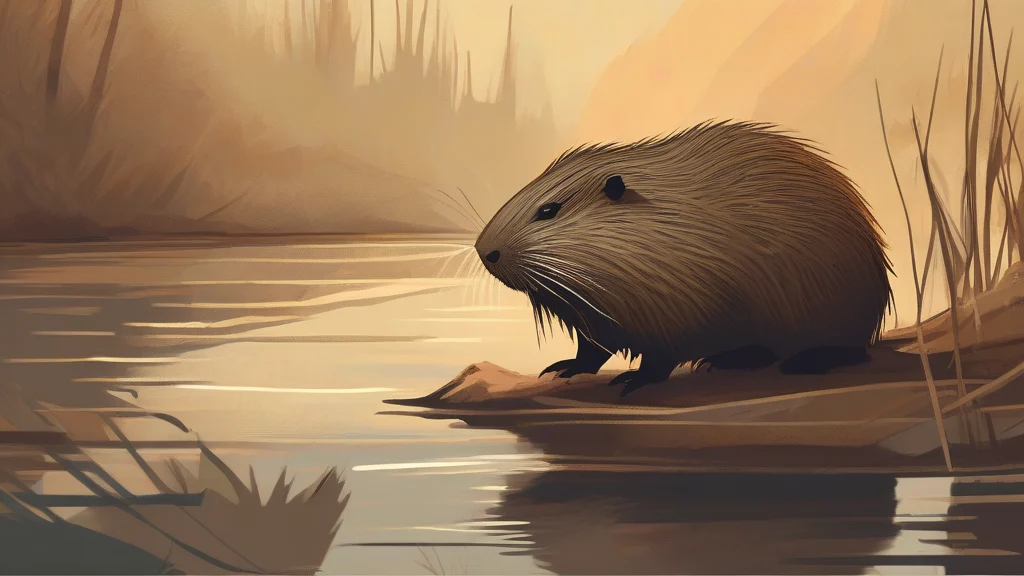
The coypu is a large, semi-aquatic rodent native to temperate and subtropical South America, where it inhabits riverbanks, lake shores, and marshes. About the size of a small dog, it has coarse brown outer fur over a soft insulating underfur, webbed hind feet, and a long, round, sparsely haired tail — features that give it something of the appearance of an oversized aquatic rat. Known in North America as the nutria, the animal was extensively farmed for its fur and was translocated to Europe and North America, where escapees established wild populations. In some regions, notably Britain, it came to be regarded as a destructive invasive species, damaging riverbanks, crops, and drainage systems until eradication programmes removed it. The noun "coypu" serves as both singular and plural, and the word appears mainly in natural history, hunting, and wildlife-management writing rather than everyday conversation.
nounA large, semi-aquatic rodent native to South America, resembling a large rat or small beaver and living along riverbanks and marshes; also called the nutria. Its fur was once widely farmed, leading to escaped populations in Europe and North America.
- A large semi-aquatic rodent (Myocastor coypus) native to South America, also known as the nutria, with dense brown fur and a round tail.
"The wetland reserve has become a haven for coypu, whose burrows riddle the riverbanks."
"Trappers were hired to control the feral coypu that were undermining the drainage banks."
"In the 1930s coypu were farmed for their soft underfur, marketed as nutria."
"By dawn, several coypu could be seen feeding among the reeds at the marsh edge."
Both plural forms are accepted; "coypu" is the more traditional unchanged plural, while "coypus" follows regular English pluralisation.
"The marshes once supported thousands of coypu before the eradication programme began."
Brought abroad for its fur, the coypu escaped captivity and colonised waterways from Louisiana to East Anglia — Britain eventually spent millions eradicating every last one.
Reviewed by Deb Chak, Editor. AI-assisted content curated by RJS Tech Solutions LLP.
Etymology of coypu
The word "coypu" comes from the Mapudungun (Mapuche) word "koypu", via American Spanish "coipú", reflecting the animal's indigenous South American origins. It entered English in the late 18th century through Spanish sources as European naturalists described the fauna of South America. The alternative name "nutria" derives from Spanish "nutria" meaning otter, which was applied to this rodent by fur farmers and trappers.
How coypu is actually used
"Coypu" is used for both singular and plural, though "coypus" also occurs. The word "nutria" is more common in North American English, while "coypu" is preferred in British English. Register: neutral, but largely confined to zoological, wildlife-management, and natural-history contexts.
Easily confused with coypu
The capybara is a much larger South American rodent (the world's biggest), while the coypu is a smaller semi-aquatic rodent often called nutria.
Beavers are larger rodents with flat, paddle-like tails that fell trees to build dams, whereas coypu have round, rat-like tails and do not build dams.