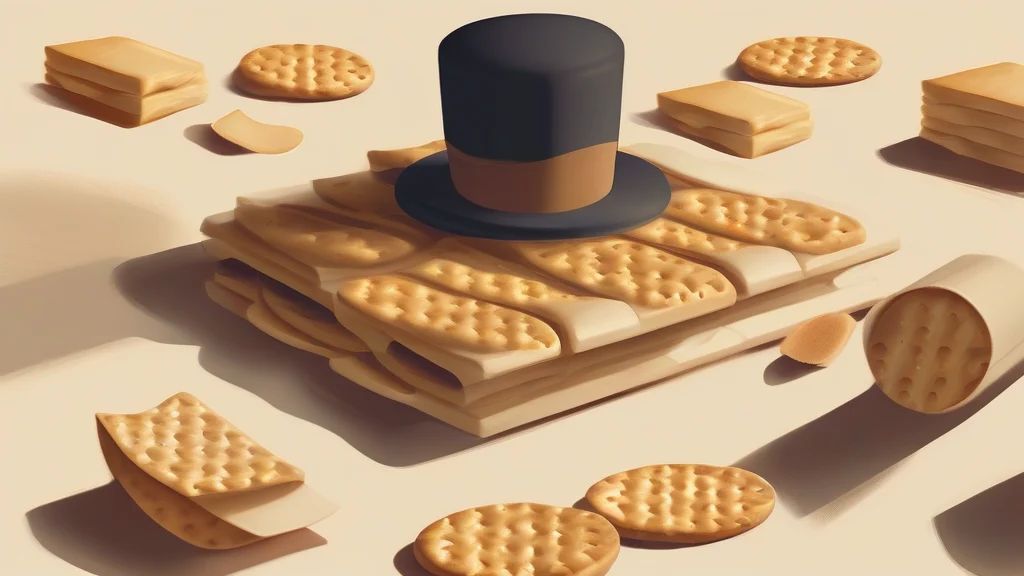
What does cracker mean?
A cracker is a thin, dry, crisp baked good made from flour, water, and often salt or fat, prized more for texture than sweetness. Crackers are eaten on their own, but they shine most as vehicles for cheese, butter, pâté, soups, and dips, making them a staple of appetizer plates and picnics across the English-speaking world. Varieties range from plain water biscuits and salted soda crackers to whole-grain and seeded versions. In British English, 'cracker' has a second festive meaning: the decorated paper tube pulled apart by two people at Christmas dinner, which snaps open with a tiny explosive charge to reveal a joke, a paper crown, and a small gift. The word can also shorten 'firecracker', describing a loud exploding firework. Informally and offensively in American usage, it has been applied as a slur toward poor white Southerners, so care is needed with context. Overall, the word is everyday vocabulary, warm and domestic in its dominant food sense.
A thin, crisp baked wafer made from unsweetened or lightly sweetened dough, typically served with cheese, soup, or dips.
"The waiter brought a basket of artisanal crackers alongside the cheese board."
This is the dominant sense in both British and American English.
(British) A decorated cardboard tube containing a paper hat, joke, and small gift, pulled apart by two people so it emits a sharp bang, traditionally used at Christmas.
"They wore paper crowns from the crackers all through Christmas lunch."
Almost exclusively British and Commonwealth usage.
Short for firecracker: a small explosive device that makes a sharp cracking noise.
"Kids lit crackers in the street during the festival."
(US, offensive) A derogatory term for a poor white person from the rural southern United States.
Offensive; avoid in polite speech.
Regular plural; often used in the mass-like phrase 'cheese and crackers'.
"Would you like some crackers with your soup?"
The Christmas cracker was invented in Victorian London when a sweet-maker added gunpowder to his bonbon wrappers — turning dessert into an explosion.
Reviewed by Deb Chak, Editor. AI-assisted content curated by RJS Tech Solutions LLP.
Etymology of cracker
The word 'cracker' derives from the verb 'crack', itself from Middle English 'craken', imitative of a sharp breaking sound, ultimately of Germanic origin. It first described things that crackle or snap, and by the late eighteenth century it named the hard, crisp biscuit whose breaking produced such a sound. The same cracking notion underlies the firecracker and the British Christmas cracker, both named for the noise they make.
How cracker is actually used
The food sense is neutral and common worldwide. The Christmas-cracker sense is distinctly British. The slang sense referring to a poor Southern white person is considered offensive in modern use and should be avoided.
Easily confused with cracker
A knacker is a person who slaughters old or injured animals (British informal), whereas a cracker is a crisp baked snack — the words differ only slightly in sound but entirely in meaning.