
What does cranelike mean?
Cranelike is an adjective meaning “resembling a crane.” It is most often used for a person, animal, plant, or object whose long neck, long legs, narrow body, and upright posture recall the profile of a crane bird. The word is more compact and polished than the phrase “like a crane,” and it often carries a slightly literary or descriptive tone. It can be used predicatively, as in “the bird stood cranelike,” or attributively, as in “a cranelike figure.” Although crane can also mean a large machine for lifting heavy loads, cranelike is most naturally understood in its zoological sense unless the context makes the mechanical reference clear. The term is useful when an author wants to focus on a characteristic outline, posture, or elegance rather than simply make a direct comparison. Its imagery is concrete: the phrase evokes a tall wading bird, typically with its neck extended and its body balanced on slender legs.
adjectiveResembling a crane, especially a crane bird in its long-necked, long-legged appearance or posture.
- Having the appearance, posture, or movement of a crane, especially a crane bird with a long neck and long legs.
"The heron stood motionless, its long neck and legs giving it a cranelike silhouette against the marsh."
"A cranelike figure stood at the edge of the water, perfectly still."
"The dancer rose from the floor in a slow, cranelike extension of her body."
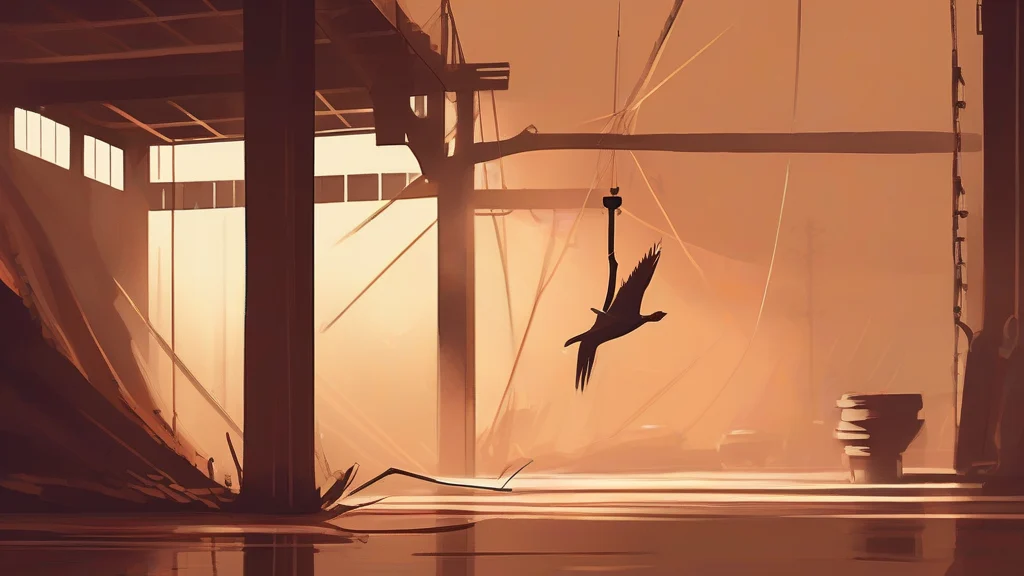
Cranes fly with their long necks stretched straight ahead, an unmistakable silhouette that “cranelike” captures in a single word.
Reviewed by Deb Chak, Editor. AI-assisted content curated by RJS Tech Solutions LLP.
Where does cranelike come from?
“Cranelike” is an English compound formed from “crane” and the suffix “-like.” The noun “crane” passed through Middle English and Old English as cran, ultimately from Latin grus, a term borrowed from Ancient Greek geranos for the bird. The element “-like” derives from Old English līc, meaning “similar to,” and is preserved in many English compounds. Latin grus also underlies scientific names associated with cranes, including the family Gruidae.
How cranelike is actually used
Usually written as one word, although some house styles use “crane-like.” It is especially natural before nouns such as “silhouette,” “neck,” and “posture.” The word is somewhat literary and emphasizes a characteristic shape or bearing rather than merely making a direct comparison.